
.svg)


Get in touch
Get in touch
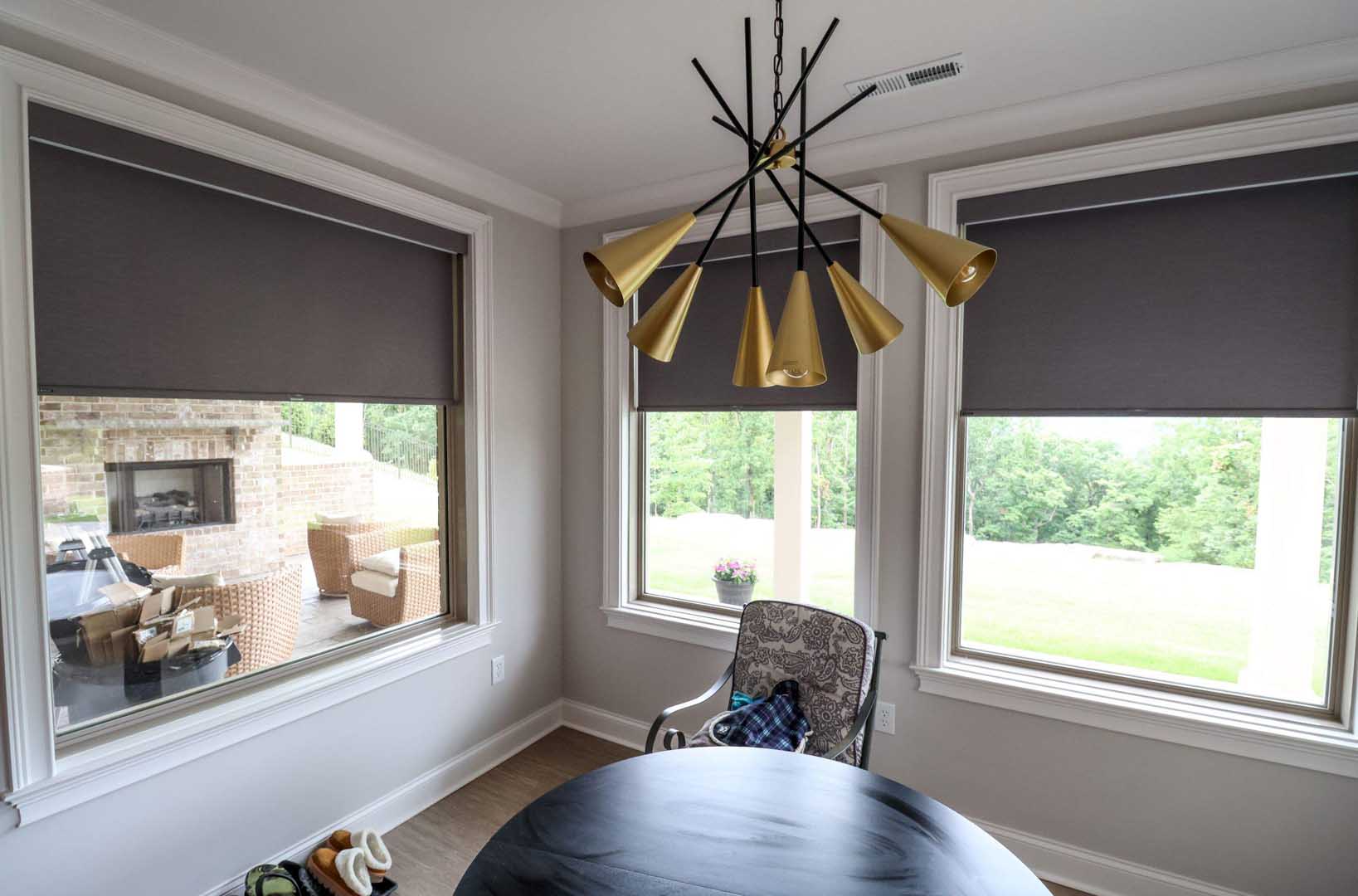
As winter creeps towards spring (which flies by entirely too fast) we know that the heat of summer is closing in fast.
With that, Blinds and Borders gets an influx of calls about patio shades.
Folks want to use that outdoor space - but without any coverage or sun protection, that isn’t feasible.
So you begin to dream.
It’d be nice to have some shades out here that will block the sun, cut down on the heat, and let us still look out and see the landscape.
Then chimes in the voice of conservatism.
What will this cost me? Is this even in the budget?
And that is where many of the inbound calls for patio shades begin.
We’d like patio shades, but have no idea what they cost and therefore no idea if it’s in the budget.
This article will help answer that question, provide knowledge about the options available when it comes to patio shades, a realistic look at how those options impact price, and what can be done to make your dream outdoor space more affordable.
There’s no way to sugar coat it. Patio shades -- proper patio shades that will withstand years of outdoor existence -- are pricey. There are two main factors:
First, the opening we are needing to cover for patio shades is quite large. Think about both the height and width of your patio opening compared to an interior window. It’s pretty standard for a patio shade to be at least 8 feet wide, and 8 or more feet tall.
Secondly, the hardware for an exterior shade needs to be significantly more durable than interior shades. The mechanisms that enable the shade to function have to withstand temperature swings, moisture, wind, and all the joys of nature.
Put those two realities together, and a patio shade will be in thousands of dollars, not hundreds.
“But I saw patio shades on Amazon for $200.”
Those are probably the same Amazon shades we were recently hired to replace at a New Hope home because after less than a year, they were completely tattered, wouldn’t stay up, and without any tethering, blew around with even the slightest breeze.
There are cheap options - and if that is all your budget can afford, we aren’t here to judge. But like I’ve experienced in my own life many times, the "cheap option" is often the expensive option because it’s not durable and needs to be replaced…multiple times.
Proper, durable, quality patio shades are going to last year after year.
The only way for us to tell you how much patio shades will cost for you is to measure your space.
But we can provide some case studies you can use as benchmarks and communicate what factors into price and what alters price.
Here are a handful of recent (2026) patio shade clients we’ve served.
Summary: $5000. Two solar screen shades covering a two-sided porch, with manual crank control.

We received a call.
“So last year we bought some cheap shades off of Amazon to help with the sun, but they are totally falling apart, won’t stay up when we retract them, and the slightest breeze has them flopping around.”
Cost was a concern, so we made some recommendations to keep the price as low as possible.
Instead of extending the shade the full height, we suggested 60”. Stopping at 60” gives ample coverage for the goal of cutting down the sun before the height causes the price to jump by changing the price grid.
This couple wanted motorized - so we priced the shades as an open roll. No headbox can provide significant savings. After considering how that would look, they opted for a manual shade with a headbox - keeping the price at a comfortable level.
The shades are secured by a cable guide. While it is never recommended to leave exterior shades out in heavy winds, there will almost always be some kind of breeze. These cable guides will keep the shade secure, unlike what they had before.
In the end they were happy with their choices and thrilled to have a patio that will be usable all year round.
Summary: $10,400. Two motorized shades covering a two-sided porch, permanently plugged in, with zipper track.
“Bugs. I don’t want any mosquitos bothering me this summer.”
That was the motive of another client.
Motorization was also a priority.
The solution was two motorized zipper track shades.
Zipper tracks are just as they sound. On the left and right there are tracks that the shade fits into. And just as you zip up a coat in the winter, the fabric has one side of the zipper, with the other side housed in the track. This zipper enclosure ensures no critters can get through when the shade is fully extended.
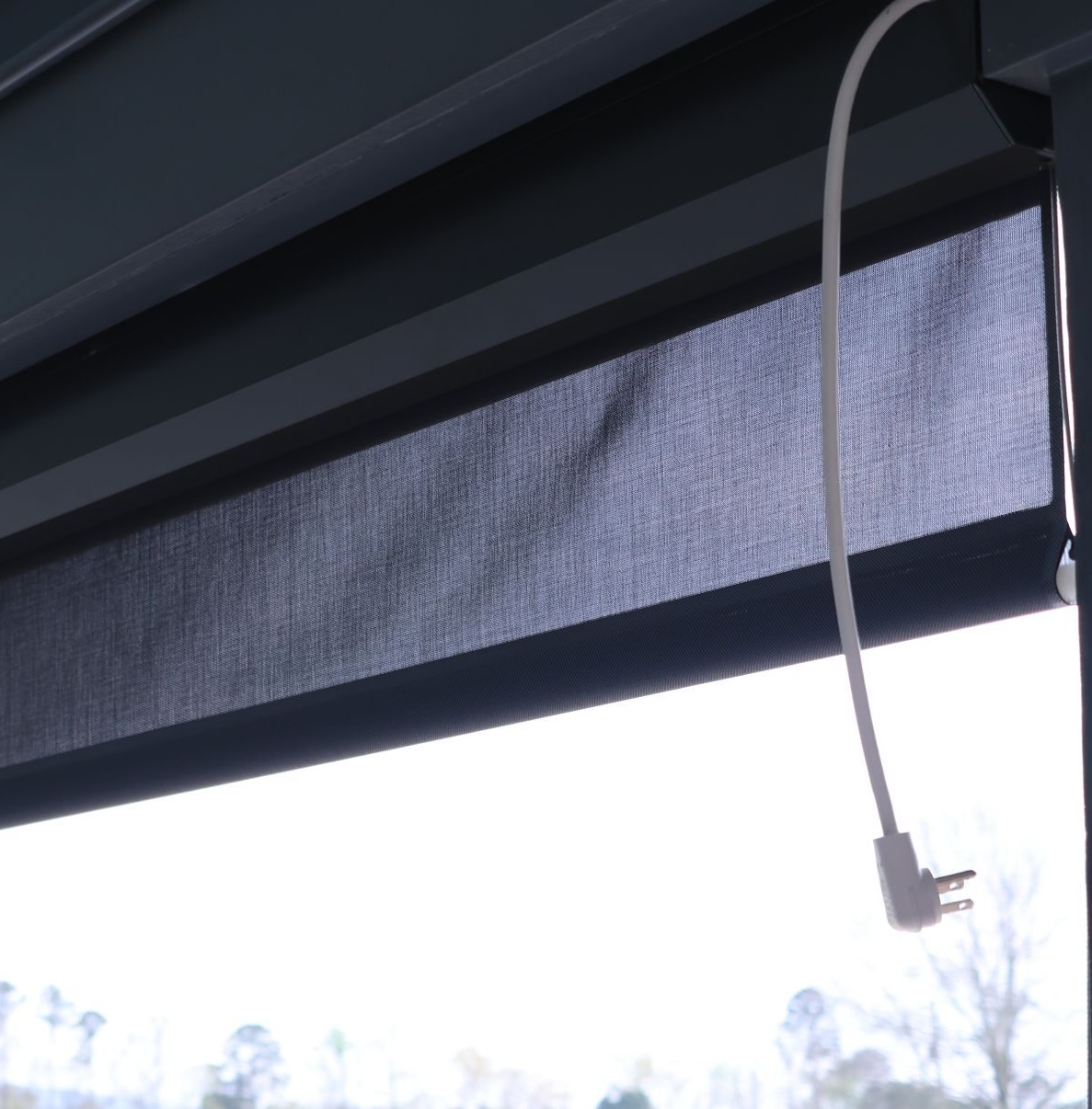
These shades are permanently plugged in, which prevented the need and expense of an electrician. Since outlets were already available, we used what was there – no need for rewiring.
Now, with the touch of a button on the remote, this client can get his outdoor space ready, even while still inside.

Summary: $14,500. Four motorized shades covering a single side, permanently plugged in.
“We just moved into a new construction home. We have a rather long porch area and need shades.”
Long, indeed.
The needs and wants of this client were straight forward. The patio is roughly 45’ long, with pillars every 12’. Similar to the first example provided, there was no need to go all the way to the ground, but this client opted for a bit more coverage.
Why? You may wonder.
Due to the positioning of this porch, the lack of trees or other houses to block the sun, and the angle at which the sun hits this side of the house, it made more sense to extend 72”.
Why 72"? Why not 71" or 73"?
72" is another pricing cut off. At or under 72" keeps the fabric price within one particular price grid. 72 1/4" would have caused a significant price jump.
The end result was four motorized solar screen shades, each a little over 11’ wide. Like the Huntsville example above, these shades will be permanently plugged in.
In addition to not needing an electrician for installation, another advantage to permanently plugged in is the flexibility for the future. If ever a shade needs to be serviced, or a change is being made to the outdoor area, the homeowner can simply unplug the shade - no need to call the electrician back out to safely disconnect wires.
These are just a few use-cases for patio shades. Every home is different. We fit the solution to your needs and preferences.
You can certainly find product cheaper online, as you read in our first case study above. The quality will not be the same.
Quality patio shades are expensive. There’s no way around that. The lowest we’ve seen a patio shade be for any of our customers has been right around $2500 for a single shade - that was for a relatively small patio opening.
The Blinds and Borders team is always happy to help. We do our best to provide an estimated price range on the phone so you know what investment range you are looking at even before anyone comes out to your home. Give us a call or shoot us a text. 256-883-1786.
Choosing the “right” or “best” window coverings for your home comes down to two things: personal preference and budget. As long as you are comfortable with the investment for a particular window treatment option, there’s no wrong choice.
So, how do you begin to narrow down your preference and what’s the expected investment for each of the options available?
That’s a most excellent question, and the goal of this article.
Let’s start by walking through the types of window treatments.
For the sake of consistency, we will use a 36” x 60” window as “average size.”
All price ranges reflect 2026 prices.
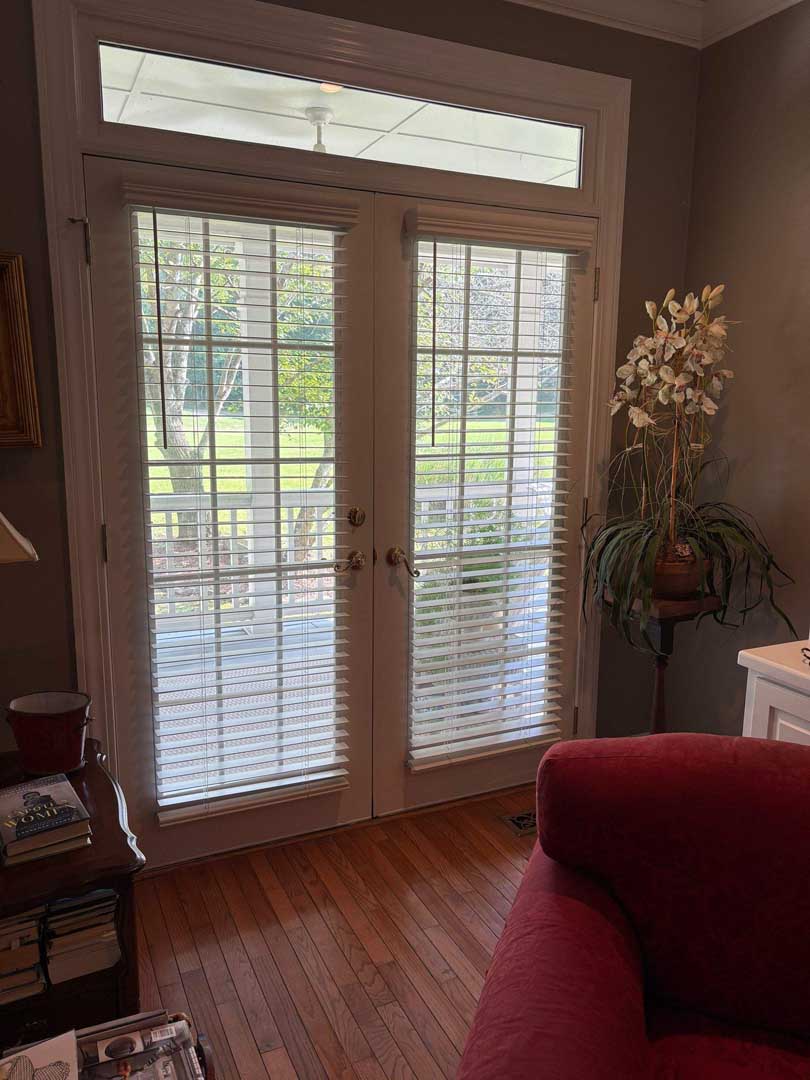
These provide a classic look at the most economical price point. The vertical slats can be tilted for maximum light control and raised and lowered without any cords. Faux wood blinds look great and function well in average sized windows.
When covering a double window, we recommend two blinds rather than a single, extra wide blind. The reason for this is ease of functionality. Very wide blinds are heavy and raising/lowering the blinds is cumbersome.
While most people opt for a white color that matches trim color, faux wood blinds are available in a variety colors.
In addition to looking fantastic, faux wood blinds are the most economical option, averaging $250-$300 for an average size window.
Real wood blinds are a premium option that can be painted or stained.

Honeycomb shades, also known as cellular shades, have two innate benefits. The comb structure of the shade makes these naturally insulating. That means your home stays cooler in the intense Alabama summers and warmer during the winter chill. You can opt for a double comb for extra insulation.
Additionally, head rail and shade fabric of honeycombs align in a way that enables these shades to provide the most snug fit in a window frame. (See comments on Roller Shades to understand the contrast). This means honeycomb shades have the least light gap of all shade options, making them an excellent choice for bedrooms.
Additionally, honeycomb fabric can be either light filtering (letting some light through the fabric) or room darkening (no light permeates through the fabric).
For even more light blockage, honeycomb shades can be ordered with a frame, providing an elegant look as well as less light leakage around the edge of the shade.
Cost for honeycomb shades, as with all shades, will vary depending upon the specific fabric chosen as well as select customization options. For most of our recent clients, honeycomb shades are averaging $350-$650 per window.
Upgrades such as top-down bottom-up functionality and motorization are also available. Another neat option is called a day-night honeycomb. This option contains two separate fabrics, usually one room darkening and one sheer. This is a common choice for bedrooms when you want the ability to darken the room at night, but allow significant light through during the day while still obscuring visibility into the room.
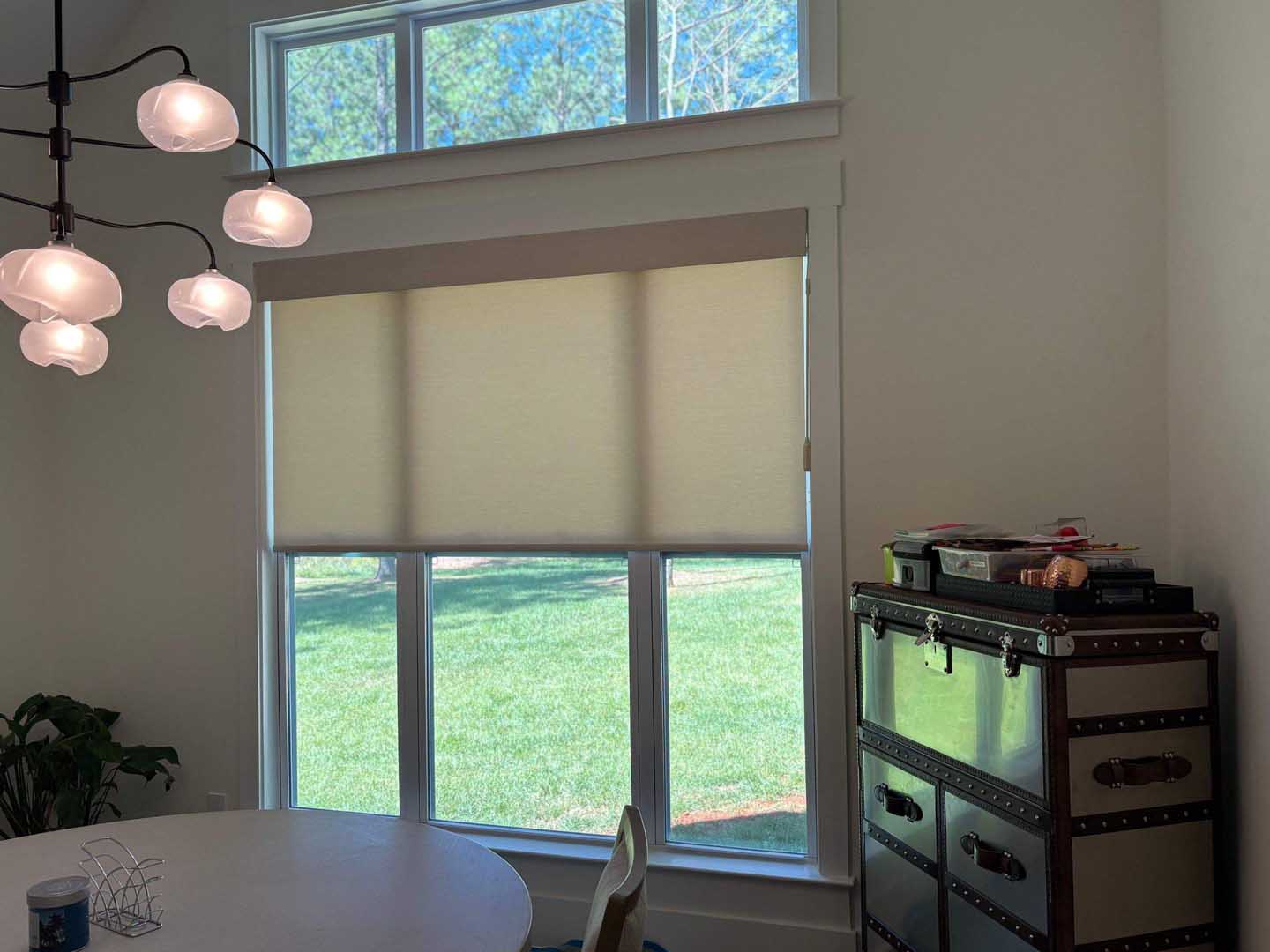
Not your grandma’s roller shade!
Those of us of a certain age have memories of opening grandma’s roller shade with a bit of a jump as the spring mechanism aggressively took over the raising of the shade. Pair that with our childhood cartoons of the cat getting wrapped up in the shade, and it’s understandable to have a natural aversion to this genre. But these shades have come a long way and are an elegant window covering solution.
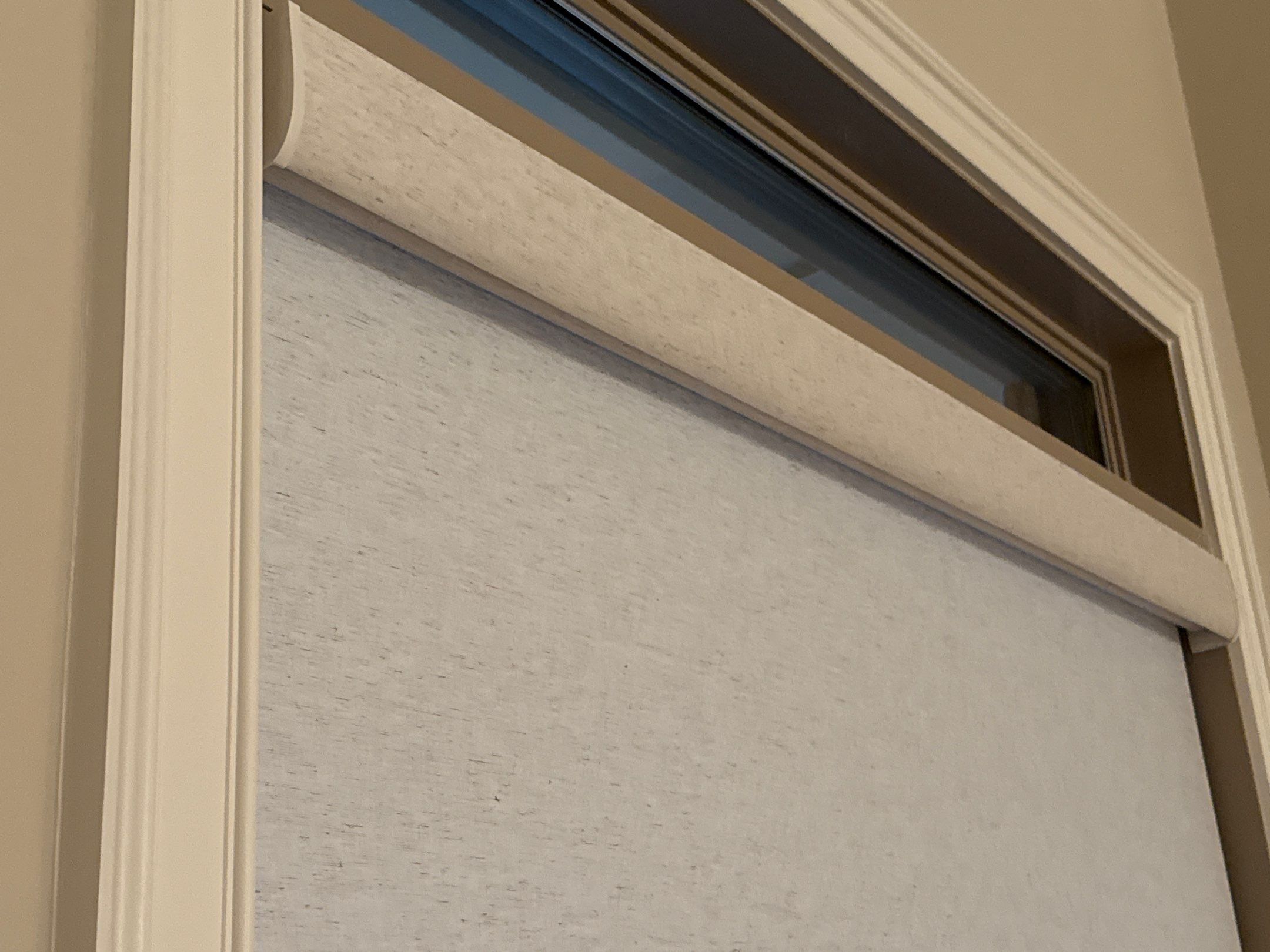
With an abundance of fabric options and multiple top treatment styles, there’s a roller shade look for every room. Like honeycombs, roller shade fabric is available as light filtering and room darkening. But roller shades have another category of fabric, sheer.
Room darkening fabric is great for bedroom and media rooms. Light filtering is the go-to choice when privacy is the main goal. Sheer lets in the most light while providing a visual barrier between you and the outside world.
Most of our clients are seeing a per window cost between $450-$650 for roller shades. The specific fabric choice as well as top treatment selection will swing the price to one side of that range or the other.
When a roller shade is properly fitted to your window (and your window is square), the top treatment will fit snug. Unlike the honeycomb shade whose fabric and headraise are the same width, roller shade fabric has what’s called a fabric deduction. What this means is that the fabric width is slightly less than the window frame width.
That deduction means a roller shade will have more light leakage around the sides of the shade compared to a honeycomb.
In most instances, this gap is perfectly fine and does not create any issue whatsoever, but it is a difference worth noting as you consider your personal preferences.
For those who prefer the look of a roller shade but want a true blackout option, we have a full blackout solution called Lightguard 360. This solution uses room darkening fabric along with a special cassette top treatment and frame to ensure there is no light leakage at all.
Lightguard 360 and motorization are two upgrade options available for roller shades.
.jpg)
Woven Wood Roman Shades are a gorgeous and versatile choice. Made of woven bamboo, these shades are available in a number of patterns and designs, each of which allows a different amount of light through.
One of the best traits of woven wood shades is you can maintain the same visual design across multiple rooms while altering how much light comes in. With the same shade “fabric”, you may opt for room darkening lining in the bedrooms, light filtering lining in the living room, and no lining in the kitchen.
With a plethora of fabric options, woven wood shades have the widest price range. There are fantastic options that keep the per-window cost around $350, and other options that raise the per-window cost to over $1000.
Woven wood shades can be motorized or come as a top-down bottom-up shade, allowing you to control the shade from both ends.

Fabric roman shades are a timeless and elegant option that elevates the look of any room. Similar to woven wood options, these can come with either a light filtering or room darkening lining. The default functionality is cordless, but motorization is also available.
Fabric roman shades are on the higher end of price. You can expect $1000+ per average size window. There are multiple “fold” options - each of which produces a slightly different look to the shade when it is retracted. These fold options allow you to customize the look to best fit your room and tastes.
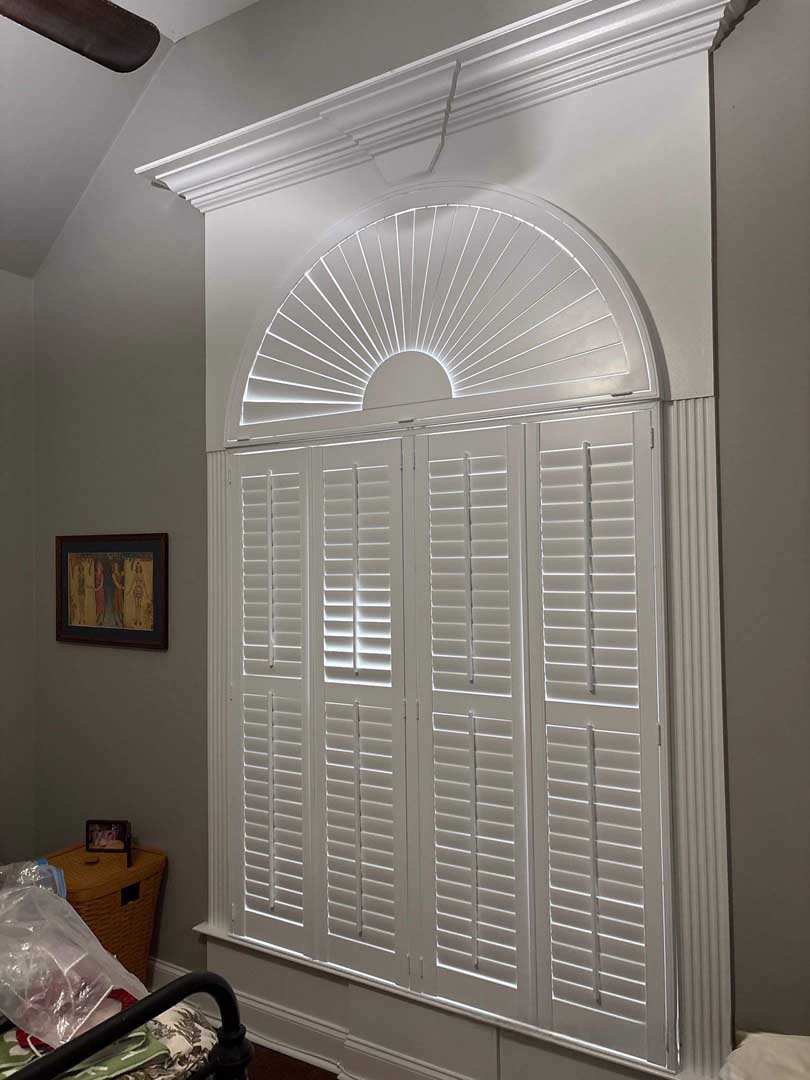
Shutters are our absolute favorite. They look wonderful in every home. Timeless, stunning, classic, durable. Multiple customization options make shutters fun for us and fun for you.
The vendor we work with offers both wood composite and full-wood shutter options. Our recommendation to most clients is the wood composite as it not only has the most favorite price point, but also provides a lifetime color-steadfastness warranty. These shutters will still be going strong long after you move out of the house.
Composite shutters are available in a number of color options. Most clients opt for a shade of white that best matches their trim color. For those who insist on full-wood, you can choose from the stock colors, or custom stain.
Depending on customization selections, a shutter for a single window usually falls between $800-$1200. If your budget allows for it, you cannot go wrong with shutters.
Across all window covering categories, motorization adds about $600 per treatment.
Hopefully you have a clearer picture of which window treatments you like the best as well as which best fit with your budget.
If you have any lingering questions, reach out to the Blinds and Borders team. We’d love the opportunity to assist you.