
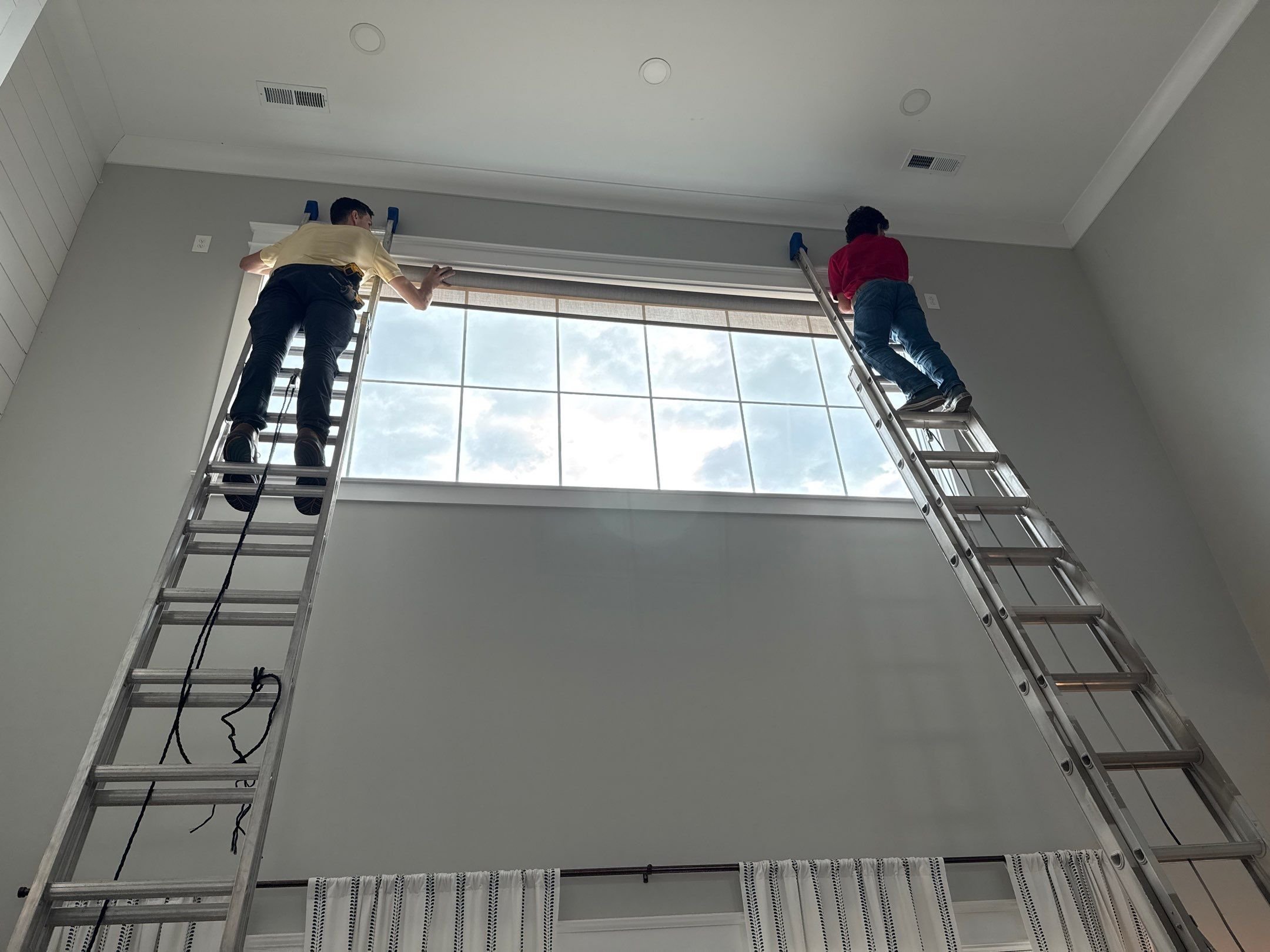
If you have noticed a pale stripe on your hardwood where the afternoon sun lands, or a couch cushion that is lighter on one side, that is sun damage, and in Alabama it happens faster than most people expect. Our long, bright summers pour sunlight through unprotected windows, and that light quietly bleaches wood floors, upholstery, rugs, artwork, and even wall paint over time. The good news is that the right window treatments reduce much of it, and you do not have to live in a dark house to get the protection. The workhorse here is a good solar screen shade, and below is how to think it through.
Here is what to know: fading is driven mostly by UV rays plus heat and visible light. Solar shades block a large share of UV while keeping your view, and layered or cellular options add protection where a room needs more. Match the treatment to how hard the sun hits each window and you protect what is in the room without closing it off.
What actually causes color change
Three things team up to cause color change your belongings. Ultraviolet light is part of the problem, and being invisible, many people underestimate it. Visible light adds to it, and heat speeds the whole process along. A west-facing window in Huntsville gets the worse of it, but your south and east facing windows are not exempt.
Solar shades: the best all-around protection
For most rooms, solar screen shades are the smartest fix. The screen fabric is rated by openness factor, and it blocks a high percentage of UV rays while still letting you see out and keep natural light. A tighter weave blocks more UV and heat; a more open weave keeps a clearer view. You get real protection for your floors and furniture without turning the room into a cave. This is why solar shades are our first recommendation for any sunny, view-facing window a homeowner does not want to cover completely.
When you want more coverage
Some rooms need more than a screen. In a formal living room with valuable furniture or art, or a bedroom you want dark anyway, roller shades in a room-darkening or blackout fabric block essentially all the light and UV when they are down. For a spot where you also fight heat and cooling bills, honeycomb shades add an insulating air pocket, so you cut fading and hold your indoor temperature at the same time. Pairing a sheer or solar layer with a darkening layer, a dual shade, lets you dial the protection up or down through the day.
A simple room-by-room plan
You do not need the same treatment everywhere, and you should not pay for it. Put your strongest UV protection on the south and west-facing windows where the sun is harshest and where your most valuable pieces sit. Use lighter solar screens on north and east windows that get gentler light. That approach protects what matters, keeps every room bright and usable, and keeps your budget where it counts. When we come out, we look at the sun exposure on each window and build exactly that kind of plan.
Why it is worth doing now
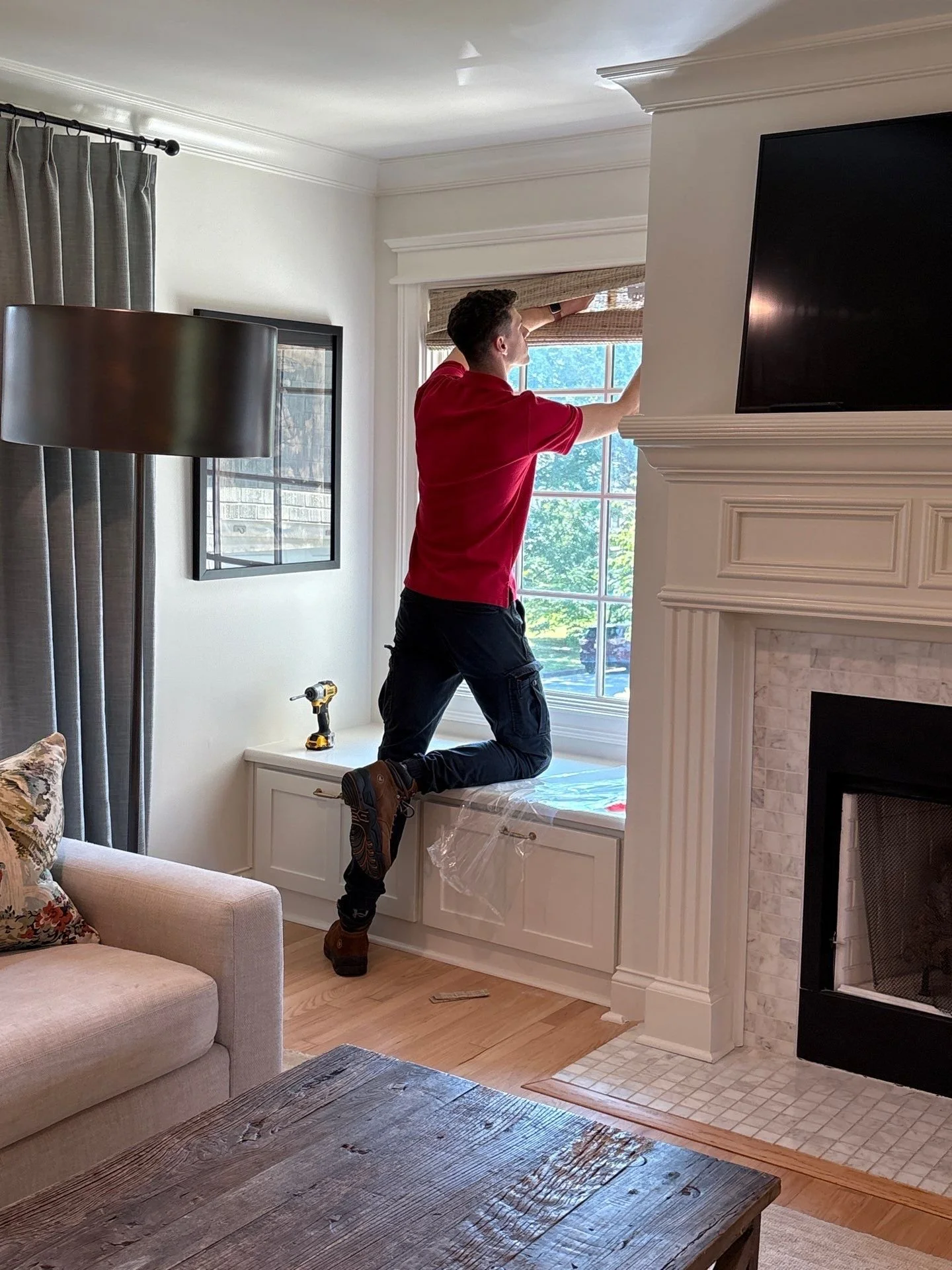
Fading is permanent. Once a floor or a fabric bleaches, no cleaning brings the color back, and refinishing or reupholstering costs far more than the window treatment would have. Getting UV protection in place before another Alabama summer is the kind of small decision that quietly saves you a big expense later.
But my windows are already Low-E
This is the most common thing we hear, and it is a fair question. If you have newer windows, you probably paid extra for a Low-E coating, and it is doing real work. Depending on the coating, Low-E glass blocks somewhere in the range of 75 to 85 percent of UV, and the best configurations go higher, compared to plain glass that lets most of it through. That is a genuine head start, and we are not going to tell you otherwise.
Here is the part that surprises people. UV is only about 40 percent of what causes fading. Even a window that stopped every last UV ray would leave the other 60 percent untouched, because visible light and solar heat still come through the glass. Low-E coatings do not address visible light or infrared heat, and that is by design. You bought windows to let light in and to see out. A coating that blocked the visible spectrum would be a wall.
Low-E glass and a solar shade are not competing products. The glass handles a share of the UV around the clock. The shade cuts the visible light and the heat, and it takes another bite out of the UV on top of what the glass already stopped. Together they cover the whole picture. Alone, either one leaves a gap.
There is one more difference that matters day to day. A coating is permanent and fixed, so it performs the same at 9 in the morning and 5 in the afternoon. A shade is adjustable. You can open it wide on a gray day and close it down when the west sun comes around, which is exactly when your floors and furniture need it most.
Frequently asked questions
What window treatments best prevent sun fading? Solar screen shades are the best all-around choice. They block a high percentage of UV rays while keeping your view and daylight. For maximum protection, room-darkening roller shades or a dual sheer-and-blackout shade block nearly all light when closed.
I already have Low-E windows. Do I still need shades? Yes, if fading is your concern. Low-E coatings block a large share of UV, but UV is only about 40 percent of what causes fading. Visible light and solar heat account for most of the rest, and Low-E glass is not designed to stop those. Shades handle the part the glass cannot.
Do solar shades really block UV rays? Yes. Solar screen fabric is rated by openness factor and blocks a large share of UV. A tighter weave blocks more UV and heat, while a more open weave keeps a clearer outward view.
Which windows fade my furniture the most? South and west-facing windows in the Huntsville area get the strongest, longest sun exposure, so they cause the most fading. Focus your strongest UV protection there and use lighter shades on north and east windows.
Can I protect my floors without making the room dark? Yes. Solar shades cut UV and heat while keeping natural light and the view, so you protect floors and furniture without closing the room off.
Protect your home before the next summer
If the Alabama sun is working on your floors and furniture, let's get ahead of it. Request a free quote or call (256) 883-1786, and we will map out UV protection window by window.
