

Smart blinds are motorized shades or blinds you can control with a remote, a phone app, a voice assistant, or a schedule.
Before you buy, you need to make four decisions: which shade style you want, how it is powered, how you want to control it, and whether it needs to work with a smart home system you already have.
Those choices drive the price far more than the brand name.
We are now a Lutron dealer, so we cover their lineup below, along with how motorized roller shades and other styles fit in.
What "smart" actually means
A smart shade is two things: a motor in the headrail or roller tube, and a way to tell it what to do. That is it. Everything else, like apps, scheduling, and voice control, comes from how you connect the motor.
So "smart blinds" can mean:
A shade with a motor and a simple handheld remote.
A shade connected to a hub or bridge so you can use an app and set schedules.
A shade tied into a whole-home system along with your lights and thermostat.
You can start simple and add control later in many systems, which is worth knowing if you are not sure how far you want to go.
If you are still deciding whether motorization is worth it at all, we covered the everyday benefits in Upgrade Your Home with Motorized Blinds. This guide is about how to buy them well.
Decision 1: Which shades can be motorized?
Not every style motorizes equally well. The ones that do it best:
Roller shades and solar shades. The most common smart shade, because the motor fits neatly inside the roller tube.
Cellular (honeycomb) shades. Popular for bedrooms and energy savings. Our honeycomb shades can be ordered with motorized lift systems, including top-down bottom-up versions.
Roman and woven shades. Available motorized in many lines, and a nice way to get a softer look without cords.
Drapery. Motorized drapery tracks exist and work well on wide windows and sliders.
Products like SmartDrape and Smartfold get asked about a lot because of the name. The "smart" there refers to the design. Ask us about motorization options for those based on your window size.
Decision 2: How will it be powered?
This one matters more than people expect.
Battery-powered. The easiest to add to an existing home, because there is no wiring. Batteries are usually hidden in the headrail or the roller tube and last a long time between changes with normal daily use. This is the right fit for most retrofit projects.
Rechargeable. Similar to battery, but you recharge instead of replacing. Some systems use a charging wand so you do not have to climb a ladder.
Hardwired. The motor is wired into your home's electrical. No batteries to ever think about, and the most reliable choice for large or heavy shades. It is easiest to plan during new construction or a remodel, when the walls are open. If you are building a custom home, this is the moment to decide. We wrote about planning ahead in our new construction and custom homes guide.
Decision 3: How do you want to control it?
There is no wrong answer, just what fits how you live.
Remote or wall keypad. Simple, reliable, and guests can figure it out.
App. Lets you control shades from your phone, set scenes, and run schedules.
Voice. Works with assistants like Amazon Alexa, Google Assistant, or Apple's Siri, depending on the system.
Schedules and sun tracking. Shades lower in the afternoon to block heat and rise in the morning without you thinking about it. In our experience, this is the feature people end up liking most.
We go further into the smart home side in how motorized blinds enhance your smart home.
Decision 4: Does it need to work with what you already have?
If you already use a smart home platform, check compatibility before you choose a shade system. It is an easy mistake to make: buying shades that do not talk to the system the rest of the house uses. Tell us what you have (Alexa, Google, Apple Home, or a whole-home system) and we will match the shades to it.
Where Lutron fits in
Lutron is one of the best-known names in shading and lighting control, and we are now a Lutron dealer. What we like about the lineup is that it scales. You can start with a few shades and a remote and grow into a whole-home system without starting over.
A quick map of the Lutron options, based on Lutron's own product information:
Serena shades are battery-powered, which makes them a straightforward upgrade for an existing home. They work with Lutron's Pico remote and the Caséta system, which connects to popular voice assistants and the Lutron app.
Triathlon shades are also battery-powered, with a wider fabric selection, and they work with more of Lutron's control systems, including RadioRA 3 and HomeWorks.
Palladiom and Sivoia QS are Lutron's wired, higher-end systems, often chosen for large windows, custom homes, and whole-home automation.
If you already have Lutron lighting in your house, such as Caséta switches, Lutron shades are usually the smoothest path, since they can live in the same app and the same scenes as your lights.
What affects the price of smart blinds
We do not quote prices without obtaining some information from you, but here is what moves the number:
Shade style and fabric. A basic roller costs less to motorize than a large cellular or Roman shade.
Window size. Bigger and heavier shades need stronger motors.
Power type. Hardwired adds electrical work. Battery is usually simpler.
Control level. A remote alone costs less than a hub, app, and whole-home integration.
Number of windows. Many people motorize the hard-to-reach and most-used windows first, then add more later.
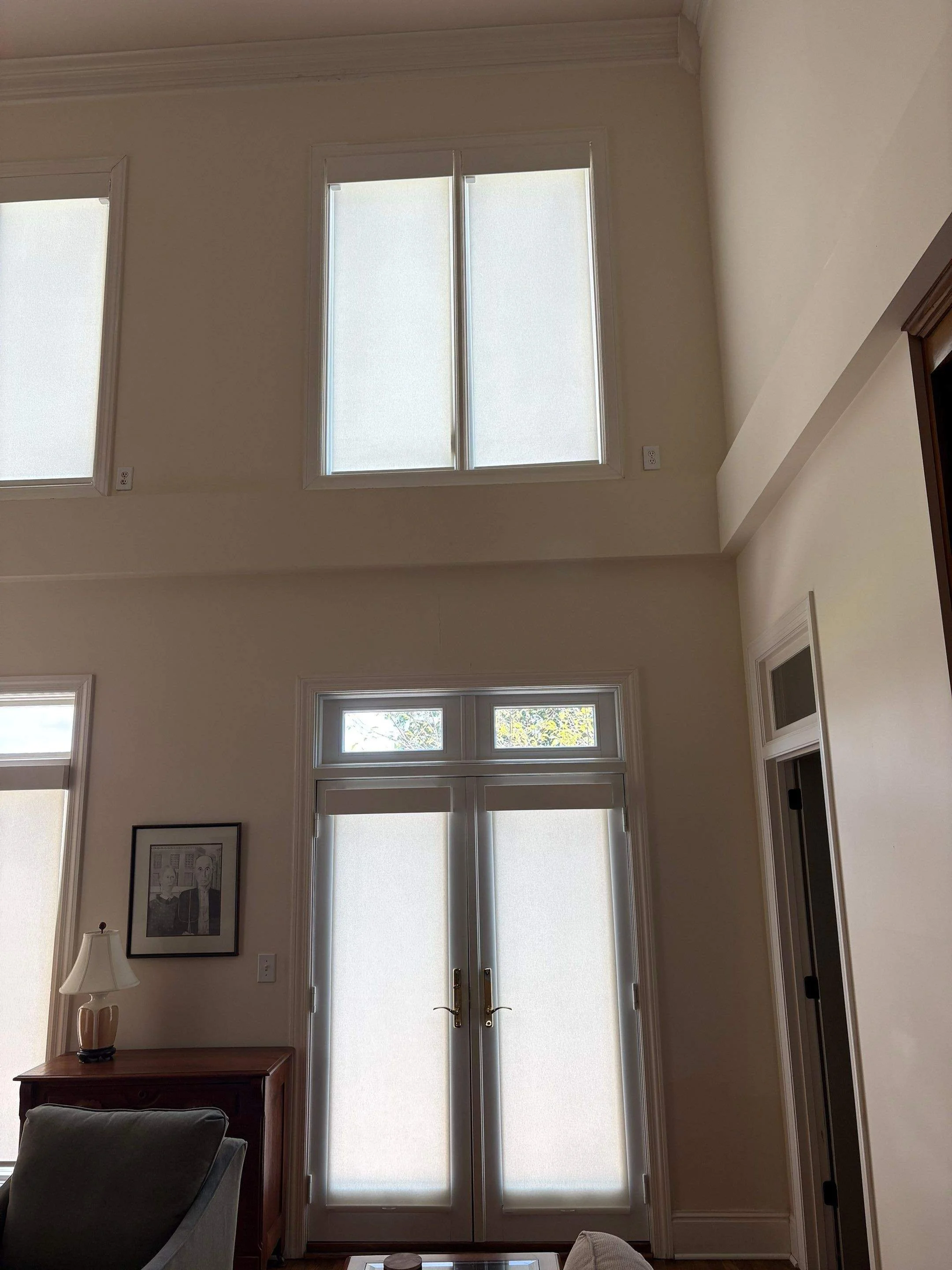
That last point is a good way to keep costs reasonable. Tall great room windows, skylights, and the shades you adjust every single day are where motorization pays off most.
Smart blinds and safety
One benefit that gets overlooked: motorized shades have no cords. If you have small kids or pets, that removes one of the biggest window treatment hazards in the house. We have more on that in our post on cordless window shades for a safer home.
Frequently asked questions
Are smart blinds worth it? They are most worth it on hard-to-reach windows, large windows you adjust daily, and rooms where scheduling saves energy. Many homeowners start with a few windows and add more later.
Do smart blinds need to be hardwired? No. Battery-powered and rechargeable options are common and do not need any wiring. Hardwired systems are a good choice for new construction or very large shades.
Do smart blinds work with Alexa or Google? Many do, depending on the system. Lutron's Caséta system, for example, works with popular voice assistants. Tell us what you use and we will match it.
Does Blinds and Borders sell Lutron shades? Yes. We are a Lutron dealer and can help you choose the right Lutron line for your home.
Can I add motors to my existing blinds? Sometimes, but it is usually more reliable to replace them with shades built for motorization. We can look at what you have and tell you honestly.
Not sure where to start?
Tell us which windows bug you most and what smart home setup you already have. We will narrow it down to a couple of options that make sense for your house and your budget. Call (256) 883-1786 for a quote, or price your window treatments online to get a starting point. Our own crew installs and sets everything up, and every job comes with a lifetime installation guarantee plus three years of service calls.
