
Energy-Efficient Window Treatments: A Huntsville Homeowner's Guide
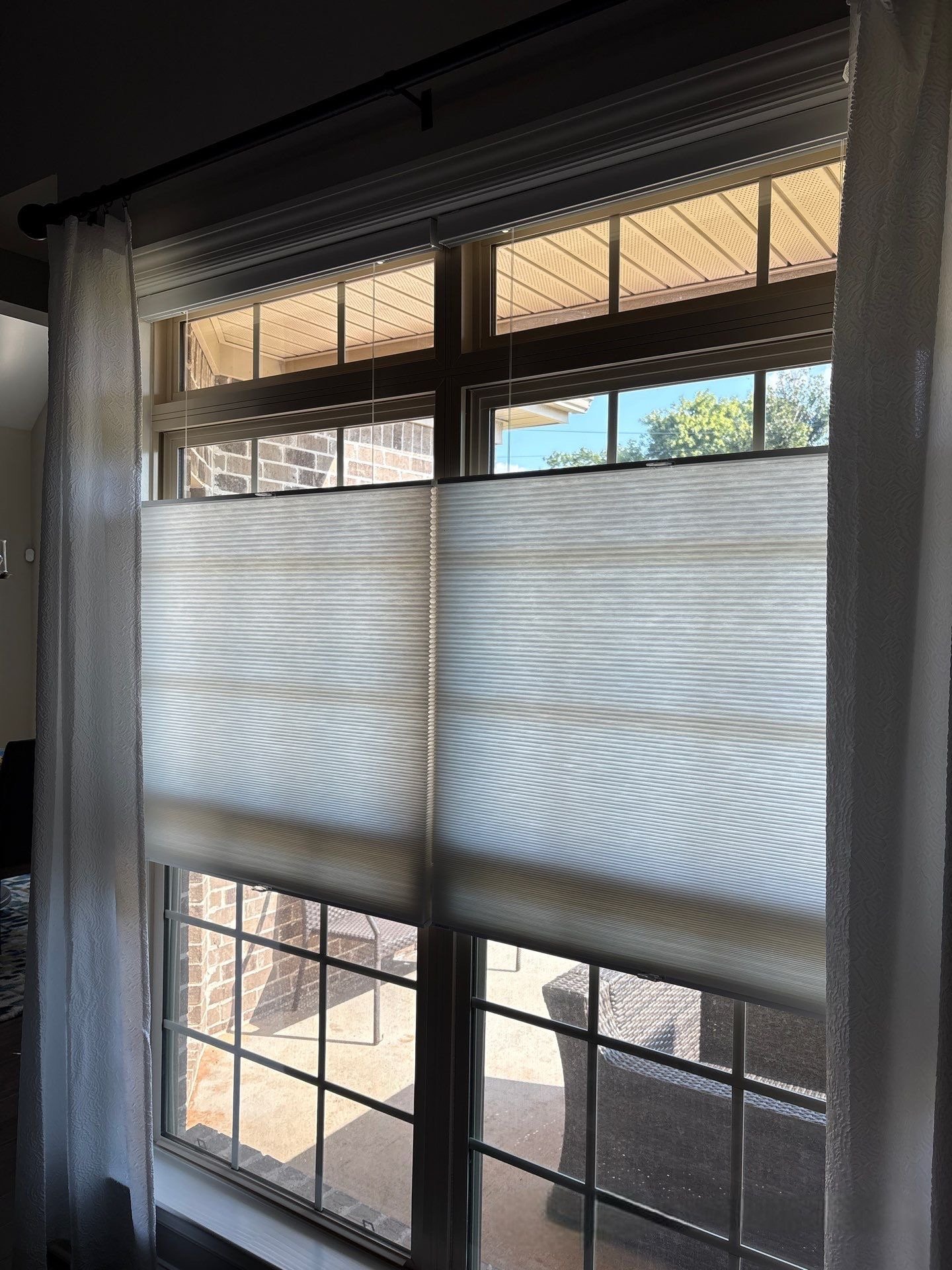
If your power bill spikes every summer and a few rooms never seem to cool down, your windows are a big part of the story. Sunlight pours through the glass all afternoon and heats the house faster than your AC can keep up. The good news is that the right window treatments push back on that, and some do it well enough to show up on your bill. Insulating honeycomb shades and heat-blocking solar shades are the two that earn their keep in our climate.
Quick answer up top, since this is what most people are really asking: the most energy-efficient window treatments are cellular (honeycomb) shades for insulation and solar shades for blocking heat and glare. Cellular shades trap air to slow heat moving through the window in both summer and winter. Solar shades stop a large share of the sun's heat before it enters the room. Which one you want depends on the room.
Why windows drive your cooling bill in Alabama
A window is the weakest insulator in most walls. During a Huntsville summer, the sun hits the glass and dumps heat straight into the room as radiant energy. Your AC reads the rising temperature and runs harder. West- and south-facing rooms feel it worst because they catch the strongest afternoon sun. Treat those windows and you take a real load off the system.
You can feel this yourself. Stand by a sunny window at 3 p.m. in July and the heat radiating off the glass is obvious. That is the heat your treatments need to stop.
Cellular (honeycomb) shades: insulation that works both ways
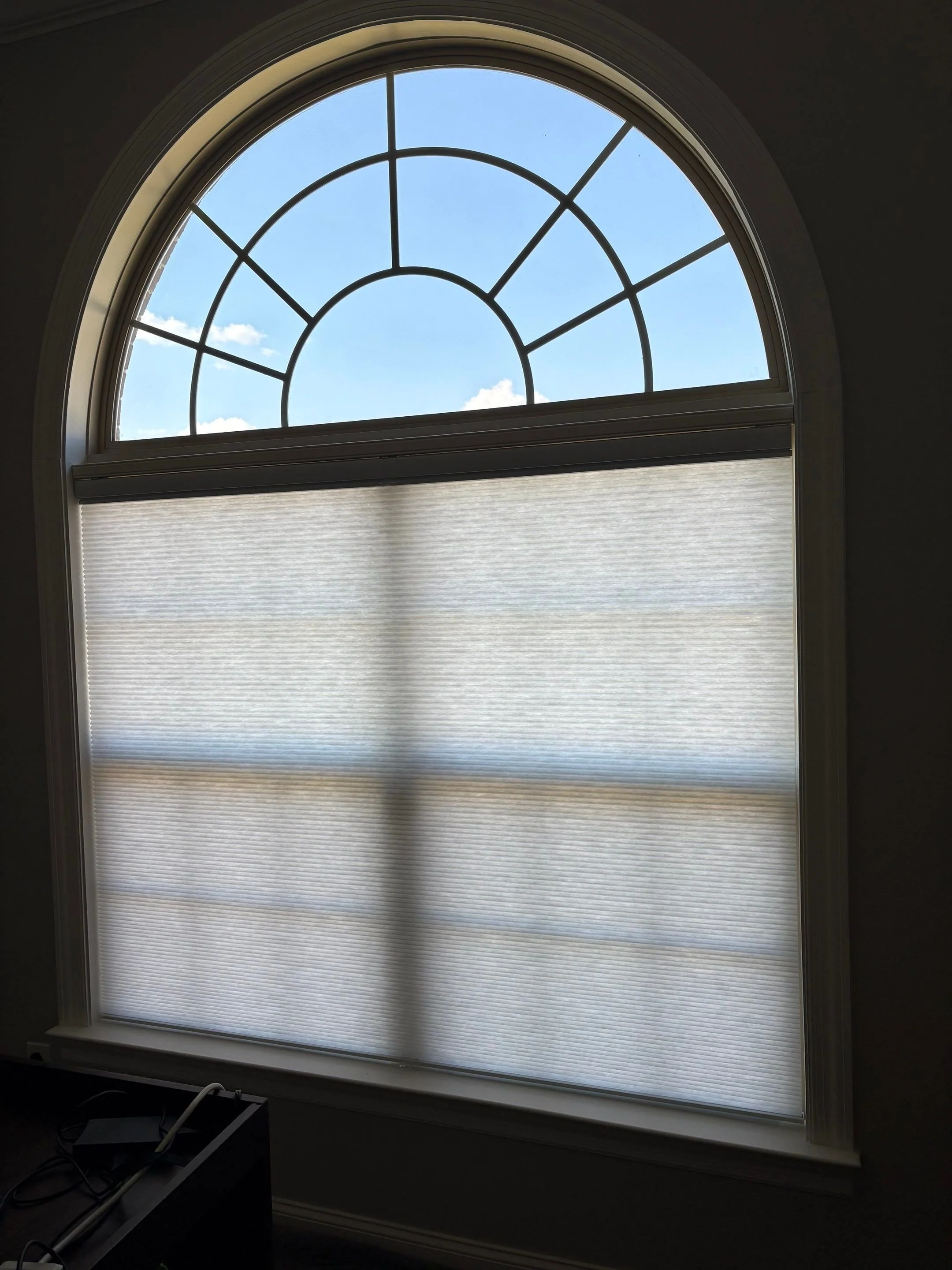
Cellular shades are built from pleated cells that, viewed from the side, look like a honeycomb. Each cell holds a pocket of trapped air, and that air pocket is what slows heat from passing through the window. In summer it helps keep heat out; in winter it helps keep warmth in. That two-season benefit is why they are usually the top pick when energy efficiency is the goal.
A few things to know:
Double-cell versions insulate more than single-cell.
They come in light-filtering and room-darkening fabrics, so you are not stuck choosing between insulation and the light level you want.
A top-down/bottom-up option lets you drop the shade from the top for light and privacy at once.
We go deeper on the cellular option in our honeycomb shades guide if you want the full rundown.
Solar shades: stop the heat, keep the view
Where cellular shades insulate, solar shades block. Their tight screen fabric stops a large portion of the sun's heat and glare at the window while still letting you see outside. That makes them the better fit for a room where you do not want to lose the view, like a living room facing the backyard or a sunroom.
Solar shade fabric is rated by openness. A lower percentage blocks more sun and heat; a higher percentage keeps more view. For the hot side of a Huntsville house, a 3% to 5% openness is a sensible middle ground. The honest limitation is nighttime privacy: solar shades are a daytime privacy product, so for a bedroom you would pair them with something else or choose a different shade.
So which should you choose?
Sort it by room and by what bugs you most. If you want maximum insulation and lower bills in a bedroom, media room, or any space where view is not the priority, go cellular. If you want to kill heat and glare in a living space without giving up the view, go solar. Plenty of Huntsville homes use both: cellular in the bedrooms, solar on the big sun-facing glass. Our team in Huntsville can walk your house and tell you which rooms call for which.
We measure every window, show you the fabric and openness options in person, and give you a real ballpark on the phone first. Call (256) 883-1786 whenever you want to start.
Frequently asked questions
What are the best window treatments for energy efficiency? Cellular (honeycomb) shades and solar shades. Cellular shades trap air to insulate the window in both summer and winter. Solar shades block a large share of the sun's heat and glare while keeping the view. Many homes use both, by room.
What is the best window style for energy efficiency? For blocking heat and saving on cooling, the standout is the cellular (honeycomb) shade, especially a double-cell version, because the trapped air slows heat transfer year-round. Solar shades are the best choice when you want to block heat but keep the outside view.
Do energy-efficient shades really lower your power bill? They reduce how much solar heat enters the home, which eases the load on your air conditioning during hot months. The savings depend on your windows, exposure, and how many you treat, so the biggest impact comes from covering your sun-facing glass first.
What is the newest trend in energy-efficient window coverings? Motorized and dual-function shades are growing fast. Examples include top-down/bottom-up cellular shades for light and privacy at once, and motorized shades set on a schedule to lower automatically during peak afternoon sun.
Cut the heat before the next bill
If your house heats up every afternoon and the bill keeps climbing, the right shades are one of the simplest fixes you can make. Request a free quote or call (256) 883-1786, and we will recommend what fits your home and your budget.
