
How Commercial Window Treatments Lower Your Business Energy Costs
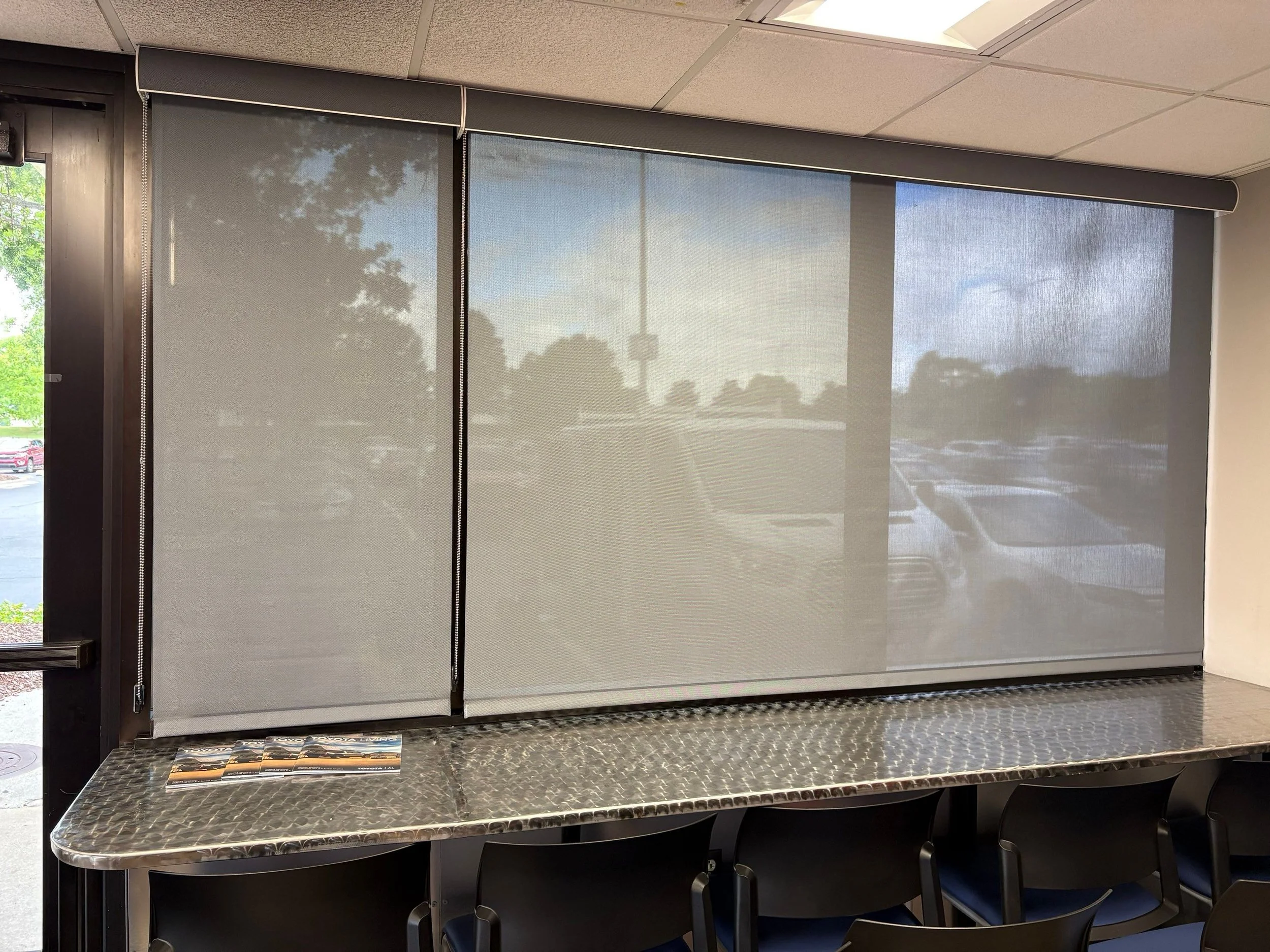
When a business wants to trim its energy bill, the conversation usually jumps to the thermostat, the HVAC unit, or the lights. Windows rarely come up. They should. For most Huntsville offices, untreated glass is one of the biggest sources of wasted cooling, and commercial window treatments are one of the cheapest fixes you can make.
Here is the direct answer: the right shades block solar heat at the window before your air conditioning has to deal with it. Less heat coming in means the system runs less, and a system that runs less costs less. In a hot climate like ours, where cooling dominates the bill for much of the year, that adds up.
Where the money actually leaks
A window is the weakest thermal point in most walls. On a sunny afternoon, sunlight pours straight through the glass and heats everything it touches: floors, desks, people. Your HVAC senses the rising temperature and works harder to hold the setpoint. The bigger the windows and the more sun they catch, the more your system fights all day.
This is why so many newer Huntsville offices, the ones with big glass curtain walls facing west or south, run high cooling bills despite efficient equipment. The equipment is fine. The windows are the problem.
Which treatments save the most
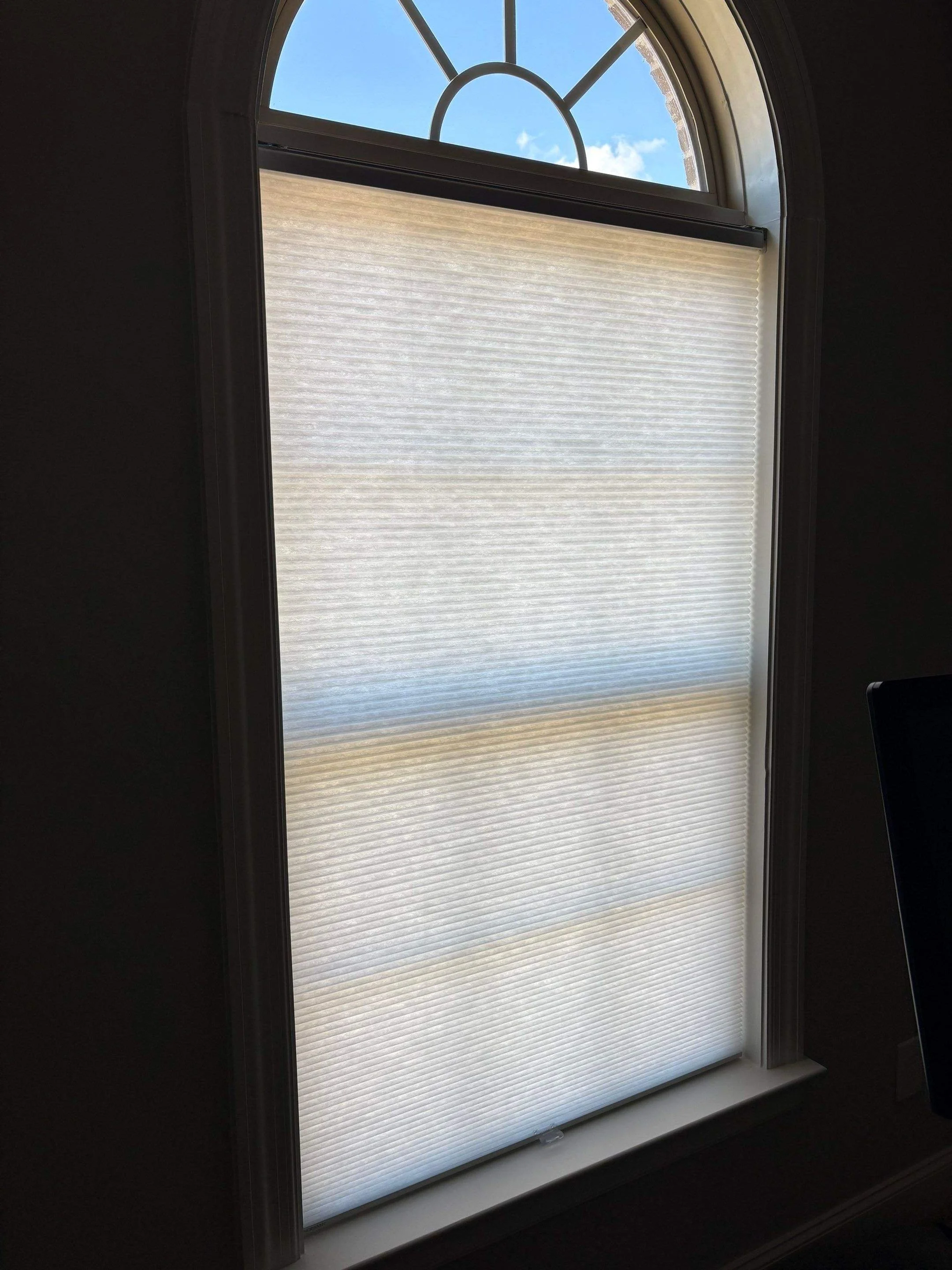
Not every shade is an energy product. Two stand out for cutting commercial cooling costs.
Solar shades block a large share of incoming solar heat with a tight screen fabric, and a denser weave (lower openness percentage) blocks more. They are the workhorse for office glass because they cut heat and glare while keeping the view. Our solar shades page covers the openness options in detail.
Cellular (honeycomb) shades work differently. Their pleated cells trap a pocket of air that insulates the window, which helps in both summer and winter. They are a strong pick for spaces where you want insulation more than a view, like a back office, a server-adjacent room, or windows you keep closed anyway.
For most businesses, solar shades on the sun-facing glass do the heavy lifting, with cellular shades added where insulation matters more than sightlines.
How to think about the payback
Window treatments are not free, so the fair question is whether they pay for themselves. The honest answer: it depends on your glass, your hours, and your rates, so we will not hand you a fake percentage. What we can say is that the savings are real and ongoing, and they stack on top of the comfort and UV-protection benefits, your flooring and furnishings fade slower too. We would rather show you the actual products, the openness options, and a straight price than promise a number we cannot stand behind. That is how we quote everything.
If you want to see the broader menu of commercial options first, our overview of top commercial window treatments is a good starting point.
What working with us looks like
We measure every window, recommend the product that matches each room's real problem, and in some cases, can give you a ballpark on the phone before the on-site visit so there are no surprises. The install crew is in-house, and the work carries a lifetime installation guarantee plus three years of service calls. Call (256) 883-1786 to talk through your space.
Frequently asked questions
Do window treatments actually lower energy bills? Yes. Shades that block solar heat at the window reduce how hard your air conditioning works, which lowers cooling costs. In a cooling-dominated climate like Huntsville's, the effect is most noticeable in summer.
Which commercial shades save the most energy? Solar shades are best for blocking solar heat on sun-facing glass while keeping the view. Cellular (honeycomb) shades insulate better and help in both summer and winter. Many offices combine the two.
Is the energy savings worth the cost? Savings vary with your window count, exposure, business hours, and utility rates, so we quote based on your actual space rather than a generic figure. The energy benefit comes alongside better comfort and UV protection for your interior.
Do these treatments help in winter too? Cellular shades do, because the trapped air insulates against heat loss as well as heat gain. Solar shades are mainly a heat- and glare-blocking product for the cooling season.
See what your windows are costing you
If your cooling bill climbs every summer, your windows are a likely culprit. Request a free quote or call (256) 883-1786, and we will recommend the treatments that cut the heat and pay you back over time.
