
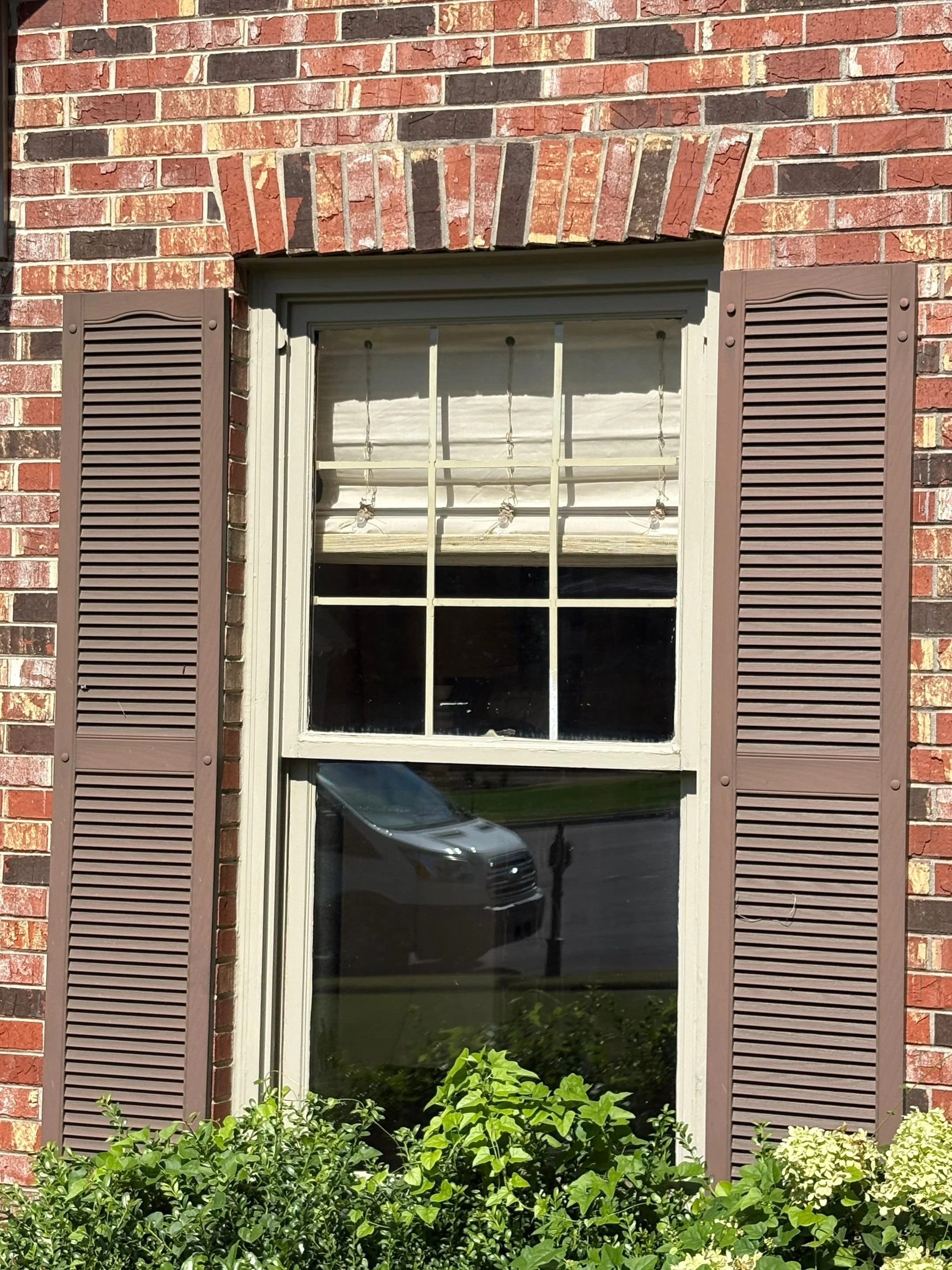
Choosing exterior shutters comes down to six decisions, made in this order: style, size, material, color, mounting, and hardware.
Style and size matter most, because they decide whether the shutters look like they belong on the house or like they were added later.
Material and color come next, and mounting and hardware are the finishing details. Here is how we walk homeowners through it.
If you want to see options as you read, our exterior shutters page has examples.
1. Start with the style of the house, not the shutter
The fastest way to pick a shutter style is to look at the house first. Each style has homes it naturally suits:
Raised panel: traditional, colonial, and brick homes with a formal look.
Louvered: southern traditional, coastal, and older homes. The slats read lighter and more classic.
Board-and-batten: farmhouse, cottage, craftsman, and rustic homes. We wrote a whole guide on board-and-batten shutters.
Bahama: hinged at the top and propped out. Best on homes with a relaxed, island or cottage feel, and they double as sun control.
Combination: louvers on top, panels below, or similar mixes. Good on larger traditional homes.
The full rundown with photos is in our guide to types of exterior shutters. If your house is a mix of styles, pick the style of the front door and trim. That is usually what your eye reads first.
2. Get the size right
This is the most common place people go wrong, and it is the one you cannot fix with paint.
Width: each shutter should be roughly half the width of the window, so the pair would cover the glass if closed. Too-narrow shutters make windows look squeezed.
Height: match the window opening, from the top of the frame to the sill.
Paired and wide windows: a double window often needs wider shutters or a different style. Sometimes the honest answer is that a window should not get shutters at all, and that is fine.
Look at the whole front of the house before you decide which windows get them. Consistency matters more than shuttering every single window.
3. Choose the material for your budget and your weather
North Alabama gives shutters a workout: strong summer sun, humidity, and the occasional hard storm.
When selecting shutter materials for your home, balancing your aesthetic preferences against budget and maintenance requirements is essential. Vinyl is the premier choice for covering a lot of windows on a budget and providing low upkeep, though its main trade-off is offering less detail and depth than wood. For those seeking a balance, composite wood delivers the look of wood with better resistance to moisture, though it costs more than vinyl.
If structural performance is your primary focus, PVC excels in durability, crisp detail, and resistance to rot, though it tends to be heavier and carries a higher price. Finally, full wood provides the most authentic look, staining capabilities, and functional performance, but it needs regular upkeep to withstand regional humidity. Understanding these distinct material profiles ensures you can select a product that aligns with both your home's exterior design and your long-term maintenance capacity.
Also decide whether you want decorative shutters (fixed to the wall) or functional ones that actually open and close. Functional shutters cost more and need precise mounting, but nothing else looks quite as real. We go through what each material and option costs in How Much Do Exterior Shutters Cost in Huntsville, AL?
4. Pick a color that ties into the house
Shutters look best when the color is borrowed from somewhere else on the house: the front door, the roof, the trim, or the brick.
A few combinations that almost always work:
White or light siding with black, charcoal, or navy.
Red brick with black, deep green, or a stained wood.
Gray siding with black or a warm wood tone.
Light brick with soft gray-blue or sage.
If you are torn, go a little darker than you think. Shutters that are too close to the siding color tend to disappear from the street.
5. Decide how they mount
Mounting depends on what the shutter is attached to and whether it is decorative or functional.
Decorative shutters on siding are usually fastened directly through the shutter into the wall, with fasteners that hide in the design.
Decorative shutters on brick need masonry anchors and a little more care to drill cleanly.
Functional shutters hang on hinges mounted to the window trim or the wall, so the trim has to be solid and square.
This is the part most worth leaving to an installer. A shutter mounted slightly crooked or off the trim line is the first thing a neighbor notices.
6. Finish with hardware
Hardware is the small detail that makes shutters look like they were built for the house. Hinges and shutter dogs (the S-shaped or rattail holdbacks that keep a shutter open) make a decorative shutter look functional.
Here is a budget tip we share often: vinyl shutters with good hardware look much more expensive than they are. If you are watching cost, that is a smart place to spend a little.
A few mistakes to avoid
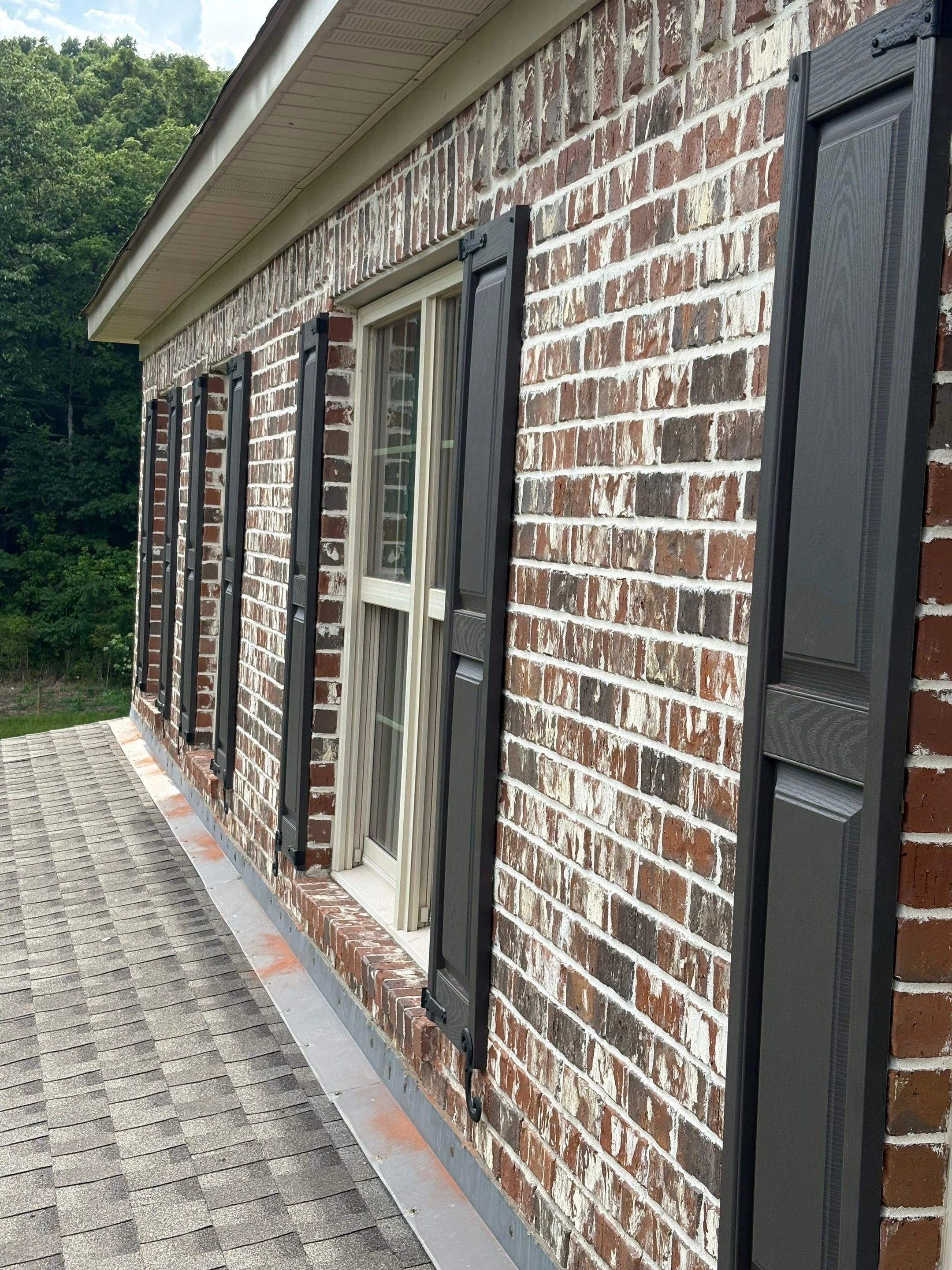
Shutters that are too narrow for the window.
Shutters mounted on the wall with a big gap from the window frame.
Mixing styles across the front of one house.
Picking a color in the store under fluorescent light. Look at samples outside, in daylight, against your siding.
We wrote more about the big-picture side of this in exterior shutters and curb appeal.
Want help deciding?
Most people can get to a short list on their own. The final call is a lot easier with samples held up against your actual windows. When we come out, we measure every opening, bring material and color samples, and tell you plainly what will and will not look right on your house. Call us at (256) 883-1786. With a window count and rough sizes, we can often give you a ballpark before we visit.
Frequently asked questions
How do I choose exterior shutters? Start with the style of the house, then size the shutters to about half the window width. After that, choose material, color, mounting, and hardware.
What size exterior shutters do I need? Each shutter should be about half the width of the window and the same height as the window opening.
What is the best material for exterior shutters in Alabama? It depends on budget and look. Vinyl is the most budget-friendly and lowest upkeep. Composite and PVC handle humidity well with more detail. Full wood looks the most authentic but needs regular maintenance.
Should shutters be darker or lighter than the house? Usually darker. A shutter close to the siding color tends to disappear from the street.
Do all windows need shutters? No. Some windows, like wide picture windows or tight paired windows, look better without them. Consistency across the front of the house matters more.
Ready to see options on your own house?
Call (256) 883-1786 for a quote, or use our online pricing tool to get a starting number. Our in-house crew handles the install from start to finish, backed by a lifetime installation guarantee and three years of service calls.
