
How to Insulate Your Huntsville Windows Before Winter Hits
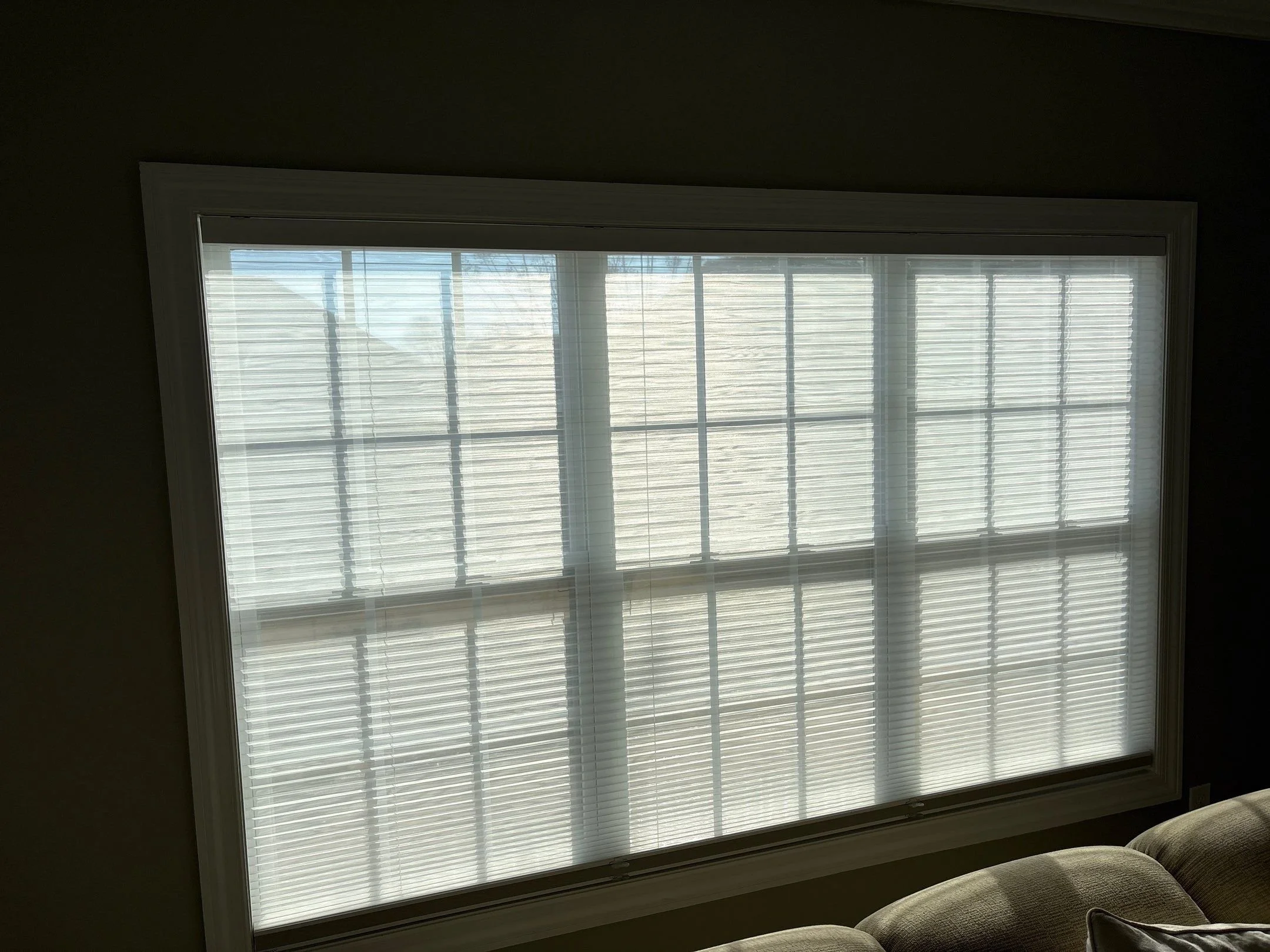
If you walk past your windows in January and feel a wall of cold, you are not imagining it. Glass is the weakest thermal point in most Huntsville homes, and a single-pane or aging double-pane window can leak a serious share of the heat your furnace just paid to make. The fix is a stack of three things: seal the air leaks, add a thermal layer at the glass, and use honeycomb shades or lined drapery to hold the warm air in the room.
Here is the order that actually matters. Air leaks first, because sealing a gap costs almost nothing. Then the glass itself, because that is where the steady, invisible heat loss happens. Window treatments come last in sequence but they carry the most weight day to day, since they are the layer you open and close with the sun.
First, find where the cold is actually coming in
There is a difference between a draft and heat loss, and homeowners mix them up constantly. A draft is moving air coming through a gap. Heat loss is warmth passing straight through the glass with no gap at all. You need to handle both, and you handle them differently.
Walk your house on a cold, breezy evening and check three places:
The sash and frame joints. Hold the back of your hand an inch from where the moving part of the window meets the fixed frame. Moving air means a failed weatherstrip.
The trim line. Run your hand around where the window casing meets the wall. Cold there usually means the gap behind the trim was never sealed properly.
The glass itself. Touch the center of the pane. If it is noticeably colder than the frame but you feel no air moving, that is conduction, not a draft. No amount of caulk will fix it.
A cheap incense stick makes this easier. Light it, hold it near the joint, and watch whether the smoke gets pulled sideways.
Seal the gaps, because that part is cheap
Anything you found in the first two checks is a sealing job. Replace worn weatherstripping on the operable sash. Run a bead of paintable caulk where the casing meets the wall. If your windows have a lock that no longer pulls the sashes tight together, adjusting or replacing that latch closes the meeting rail and kills a surprising amount of air movement.
Rope caulk is the seasonal option for windows you do not plan to open until spring. It presses into the gap by hand, seals well, and peels back off in March without damaging paint.
None of this is glamorous, and none of it will fix the cold glass. But sealing is the step where a few dollars buys real comfort, so it goes first.
The glass is where the steady heat loss happens
Once the gaps are closed, whatever cold you still feel is coming through the pane. In North Alabama that is the bigger long-term cost, because it runs all day and all night for months.
Insulating window film is the low-cost route. It adds a thin barrier and cuts some radiant loss, and it works fine on a rarely used window. It also looks like film, and it has to come off in spring, which is why most homeowners try it once and move on.
Replacement windows are the permanent fix and the expensive one. If your windows are original to a 1970s or 1980s home and the seals have failed (you can spot this by the fog between panes), replacement is worth pricing. For most people, though, the window is not the thing they are ready to replace this year.
Which is why the treatment layer does the heavy lifting.
Cellular shades are the treatment that actually insulates
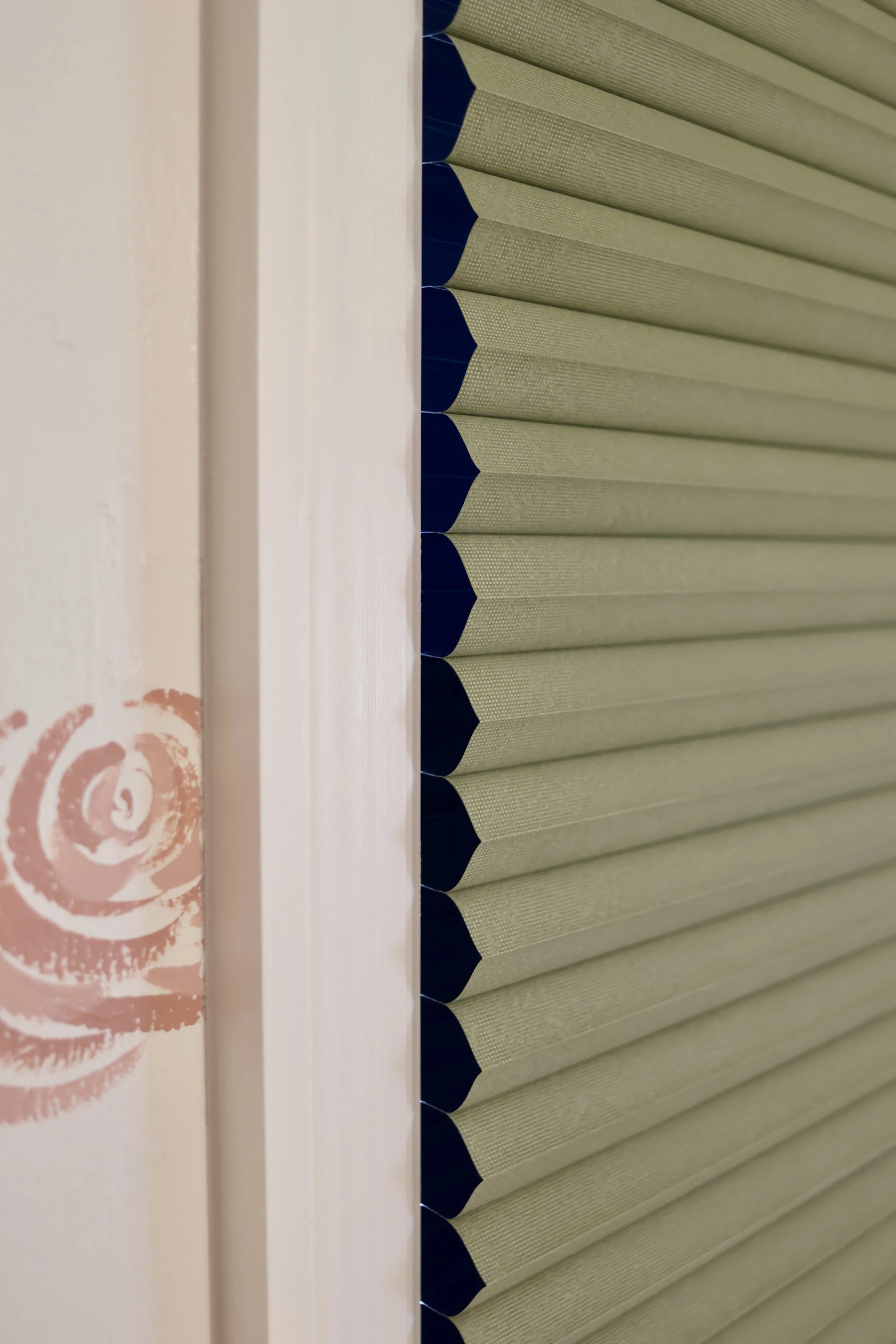
Most window coverings block light. Cellular shades, also called honeycomb shades, block heat transfer, and that is a different job. The fabric is folded into hollow cells that sit against the window and trap a layer of still air. Still air is a genuinely good insulator, which is the same reason a puffy coat works. The pocket does the insulating, not the fabric.
A few things change how much they help:
Double cell beats single cell for insulation. Two rows of trapped air outperform one.
A tight fit matters more than people expect. A shade mounted inside the window frame with minimal side gaps holds far more heat than one hanging loose outside the casing. Side channels close that gap almost completely.
Room darkening fabrics insulate better than light filtering ones, because the denser weave and liner slow heat transfer further. In a bedroom that is a free upgrade. In a room where you want daylight, light filtering is still a real improvement over bare glass.
We have written more on how the cell structure works in our guide to energy-efficient honeycomb shades if you want the detail.
Layer drapery over the top for the coldest windows
On a north-facing wall, a big picture window, or any room that never quite warms up, one layer is not enough. Adding lined drapery over a cellular shade gives you two barriers with a pocket of air between them, and it is noticeably warmer than either one alone.
Two details separate drapery that insulates from drapery that just decorates. Mount the rod higher and wider than the window so the panels seal against the wall instead of the casing. And let the fabric reach the floor, or close to it. Stop a panel six inches short and you have essentially built a chimney: warm air from the room slides under the hem, cools against the glass, and pours back out at your feet.
Work the sun instead of ignoring it
Winter sun is free heat, and Huntsville gets a decent amount of it even in January. On a clear day, open the shades on your south and west windows in the late morning and let the sun warm the room. Then close everything at dusk, before the temperature drops, so the heat you gained stays inside.
That habit alone changes how a room feels in the evening. It costs nothing and most people never think to do it.
What we would do at your house
We handle a lot of winter comfort calls around Huntsville and North Alabama, and the pattern is usually the same: one or two rooms nobody wants to sit in after dark. When we come out, we look at which direction the windows face, how the glass is performing, and whether the existing treatments have gaps big enough to undo the whole point. Then we measure for a fit that seals rather than approximately covers, because on insulation the fit is most of the result.
Our crew installs everything in-house, and every job carries a lifetime installation guarantee plus three years of service calls. Call us at (256) 883-1786 for a quote, or start with our window treatment pricing tool if you want a number first.
Frequently asked questions
How much heat do windows actually lose in winter? Windows are typically the weakest insulating surface in a house, and a meaningful share of a home's heat loss moves through them. The exact number depends on the age of the glass, the number of panes, and how well the frame is sealed, so an older single-pane window loses far more than a newer insulated unit.
Do cellular shades really keep heat in? Yes. The hollow cells trap still air against the glass, which slows heat transfer. Double-cell shades insulate better than single-cell, and a tight inside-mount fit with minimal side gaps makes a bigger difference than most people expect.
Is window film worth it for winter? It helps on a budget and on windows you rarely open, but it is a modest improvement and it has to be removed in spring. If you want a fix you will keep using, insulating shades are the better spend.
Should I insulate windows or just replace them? Replacement is the permanent answer if your seals have failed, which you can usually spot as fog between the panes. Short of that, sealing the gaps and adding insulating treatments gets you most of the comfort for a fraction of the cost.
What is the cheapest way to stop cold coming off a window? Rope caulk on the gaps and a thick, floor-length curtain closed at dusk. It is not elegant, but it works, and it costs very little.
Get ahead of the first cold snap
The best time to deal with this is before the temperature actually drops, when you can still measure, order, and install without living through a cold room in the meantime. If you have a window or a whole room that never feels right in winter, we will come look at it and tell you what is actually going on. Call (256) 883-1786 and we will get you on the schedule.
