
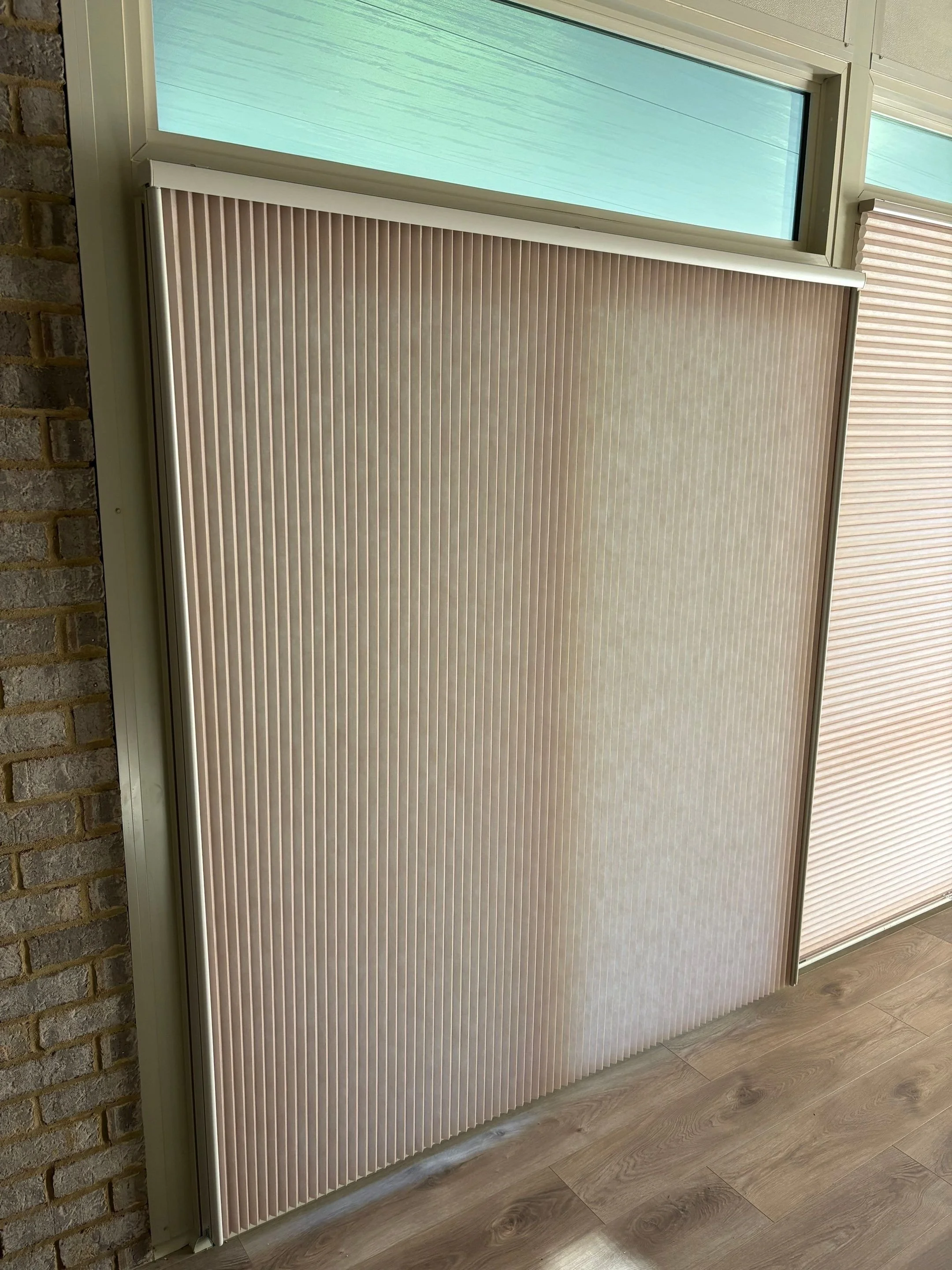
In summer the question is what blocks the sun. In winter it flips: what holds the warm air in the room instead of letting it bleed out through the glass. Those are different jobs, and the products that win at one do not automatically win at the other.
If you already read our summer guide to blinds and shades that block heat, this is the other half of the year, and the ranking changes. Cellular honeycomb shades come out on top, with lined drapery close behind and everything else some distance back.
Here is how they actually compare, and where each one earns a place.
1. Cellular honeycomb shades
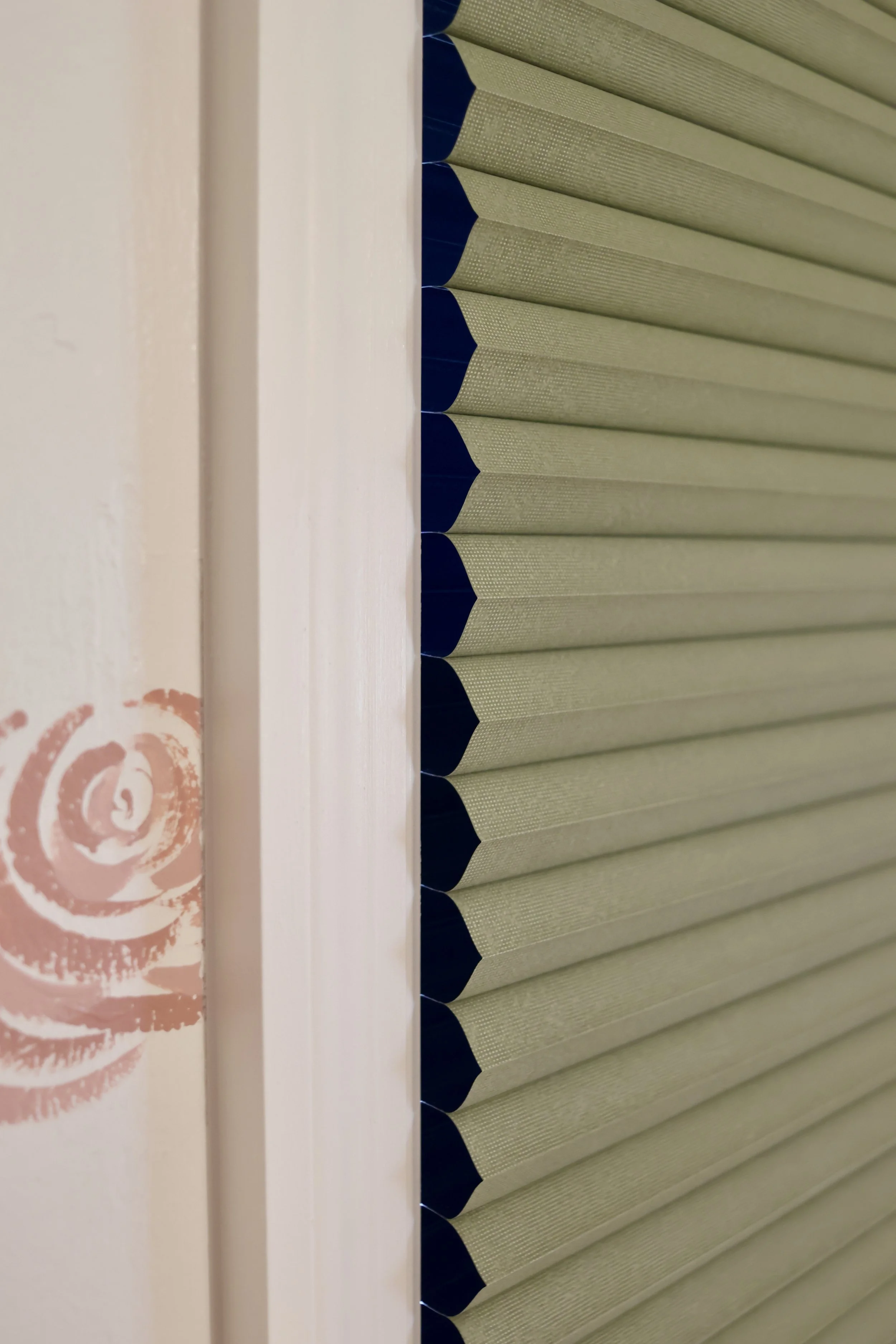
Cellular shades are the only common window covering designed specifically to slow heat transfer. The fabric folds into hollow six-sided cells that hold a pocket of still air against the glass. Still air insulates well, which is the same principle as a puffy coat.
Specification matters here more than it does with anything else on this list. A double-cell shade in a room-darkening fabric, mounted inside the frame and measured tight, is a genuinely different product from a single-cell light filter hung loose outside the casing, even though a catalog lists them a line apart. We broke that down properly in do cellular shades really save energy in winter.
If you only change one thing this winter, this is the one.
2. Lined and interlined drapery
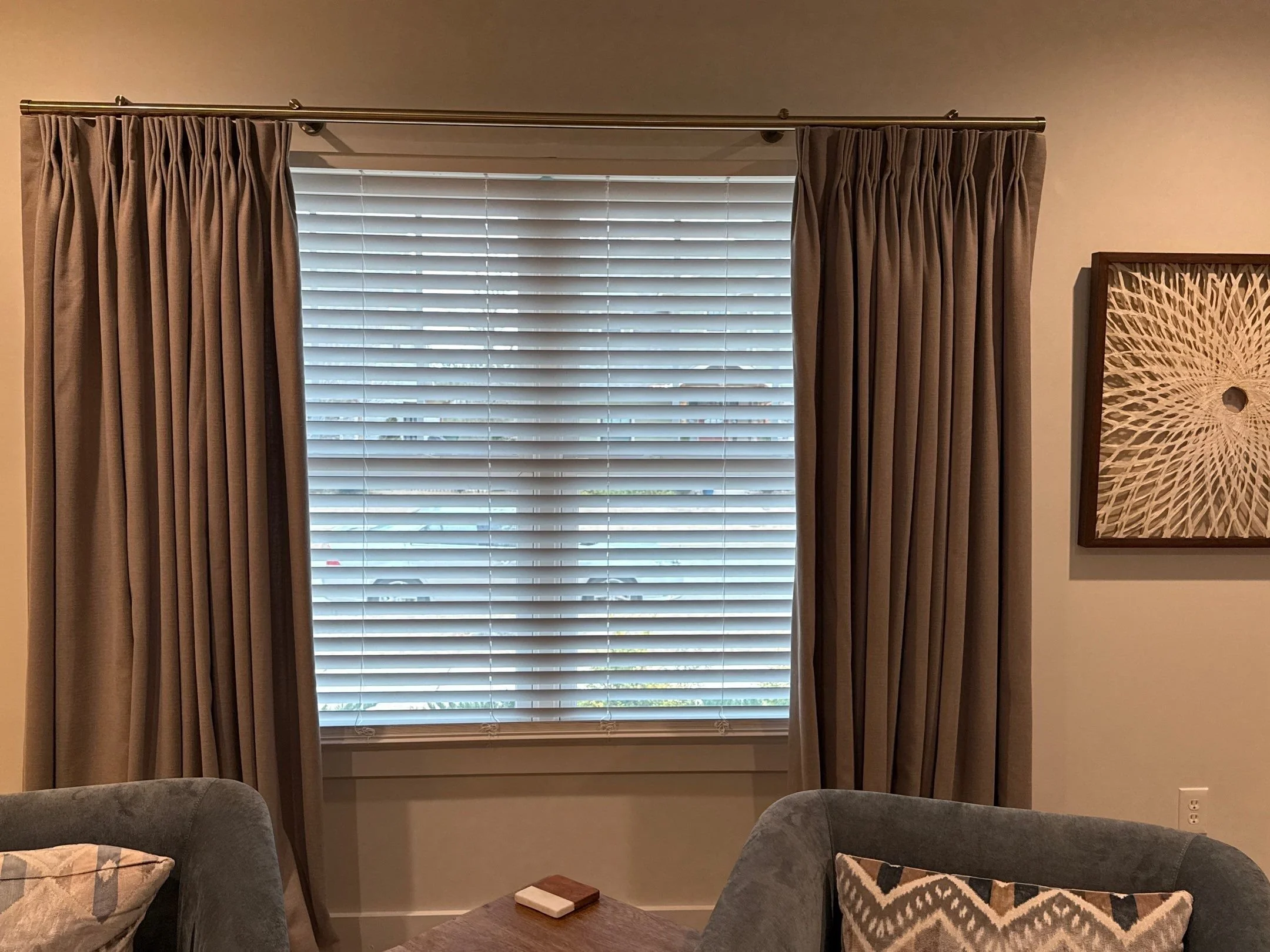
Heavy drapery is the oldest answer to a cold window and it still works, but only if it is made and hung properly. An unlined panel is decoration. A lined panel is insulation, and an interlined one (with a soft layer sandwiched between face fabric and lining) is better again.
Three details separate drapery that insulates from drapery that just hangs there:
Mount high and wide so the panels close against the wall rather than the window casing. Sealing the perimeter is most of the benefit.
Go to the floor. A short panel lets warm room air slide underneath, roll down the cold glass, and spill back into the room at ankle height. That convection loop is exactly what you are trying to stop.
Close them at dusk. Drapery only insulates when it is closed, and the biggest heat loss happens after the sun goes down.
Drapery is also the layer that makes a room feel warm before it is warm, which is not nothing in January.
3. Plantation shutters
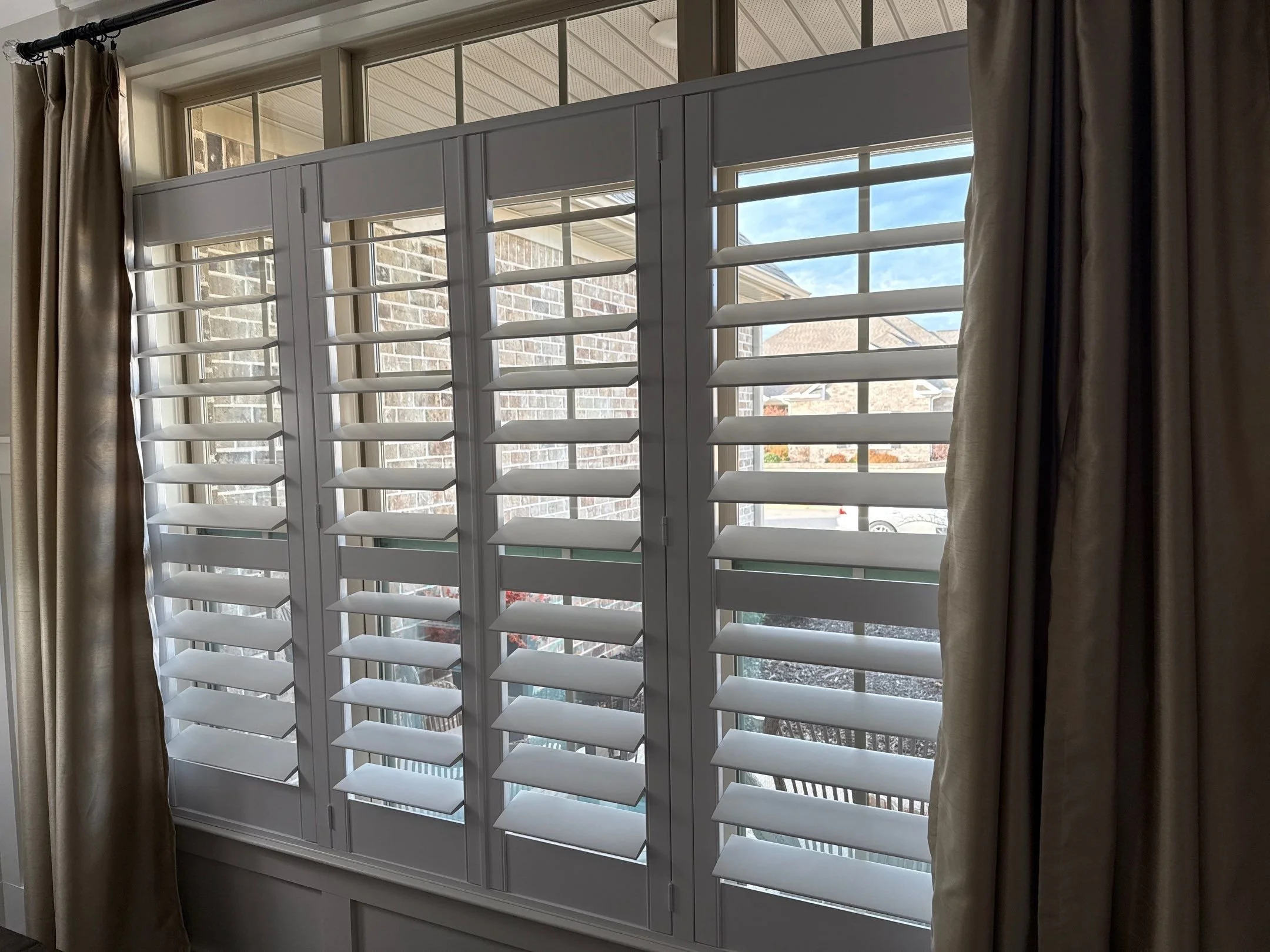
Plantation shutters sit somewhere in the middle, and higher than most people assume. The panel is solid material rather than fabric, and because a shutter is built into a frame that fits the window opening, a well-made one seals the perimeter better than a shade hanging in front of it.
With the louvers closed you get a solid barrier at the glass with a still-air gap behind it. They will not match a double-cell shade, but they are meaningfully better than blinds, and they are permanent, architectural, and they do the summer job too.
4. Real and faux wood blinds
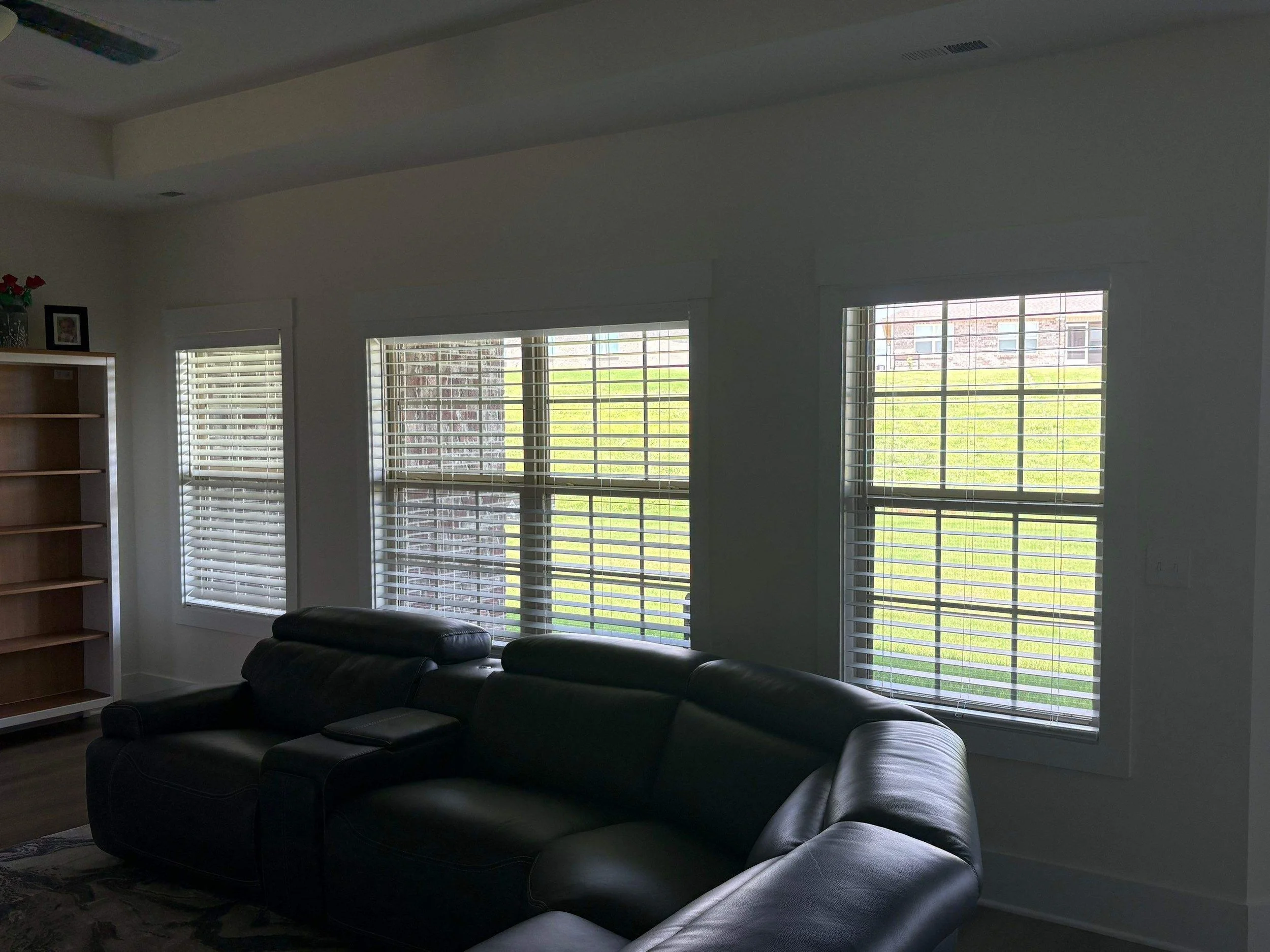
Wood and faux wood blinds are a real step down for heat retention, and the reason is structural. A blind is a stack of individual slats. Even fully closed, there are gaps at every slat overlap and around the edges, so it cannot hold a pocket of air. Wood itself insulates better than aluminum, and faux wood is more stable in humidity, but neither overcomes the gaps.
They are a fine choice for light control, privacy and looks. They are not the product to buy if the problem you are solving is a cold room.
5. Roller and solar shades
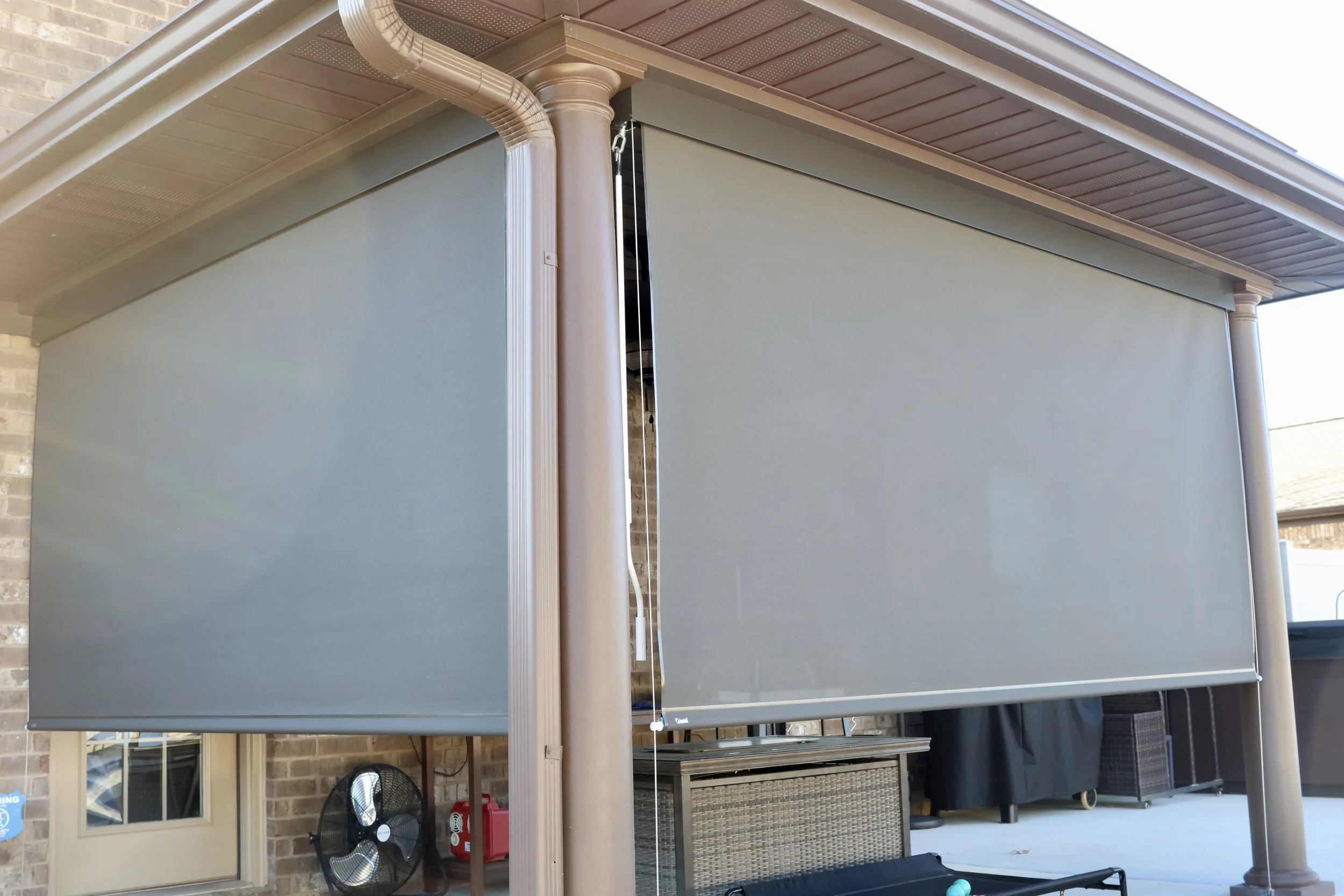
Roller shades are a single flat layer of fabric with a gap at the sides where the fabric rolls. There is no air pocket and no perimeter seal, so heat retention is minimal.
Solar screen shades are further down still for winter purposes. They are engineered with an open weave to block solar energy while preserving view, which is exactly right in July and close to irrelevant in January.
None of this makes them bad products. It makes them the wrong tool for this particular job. Where they shine is the summer half of the year, and on a west-facing window you may well want both: a solar shade for the heat coming in and something insulating for the heat going out.
The best answer is usually two layers
Almost every genuinely cold window in a Huntsville home gets solved the same way: a cellular shade at the glass with lined drapery over it. You end up with two barriers and a pocket of air between them, and the perimeter is sealed by the drapery closing against the wall.
That combination outperforms either layer alone by a wide margin, and it is what we specify on north-facing rooms, bonus rooms over garages, and big picture windows that never quite feel right.
What to do before you buy anything
Seal the air leaks first. A shade manages heat passing through the glass. It does nothing about air coming through a failed weatherstrip or an unsealed gap behind the trim. Those are cheap fixes and they should come first, or you will spend money on a good shade and still feel a draft.
Then work out which windows actually have the problem. In most houses it is one or two rooms, not the whole place. Fixing those properly beats putting something mediocre on every window.
When we come out we check the exposure, look at the condition of the glass, and see whether whatever is on the window now has gaps big enough to defeat the purpose. Very often the existing treatment is a decent product and a poor fit. Our crew installs in-house, and every job carries a lifetime installation guarantee plus three years of service calls.
Frequently asked questions
What blinds keep heat in the best? Cellular honeycomb shades, particularly double-cell with a room-darkening fabric and a tight inside mount. The hollow cells trap still air against the glass, which is what slows the heat loss.
Do wood blinds keep heat in? Only marginally. A blind is a stack of slats with gaps at every overlap and around the edges, so it cannot hold an insulating pocket of air. They are good for light control, not for warmth.
Are thermal curtains better than cellular shades? On their own, a good double-cell shade usually outperforms curtains. But lined, floor-length drapery mounted high and wide is close, and the two layered together beat either one alone.
Should I close blinds at night in winter? Yes. Most heat loss through windows happens after dark. Closing your treatments at dusk, after letting the winter sun warm the room during the day, is a free improvement.
Will insulating shades lower my heating bill? They reduce heat loss through the windows, which is one part of the whole picture. How much that shows on a bill depends on your glass, your insulation, your thermostat and how many windows you treat. What you will notice first is that the room stops feeling cold to sit in.
Fix the cold room, not every window
You probably know exactly which room in your house we are talking about. Tell us which one and we will come look at what is causing it and what will actually fix it. Call (256) 883-1786 for a quote, or start with our pricing tool.
