
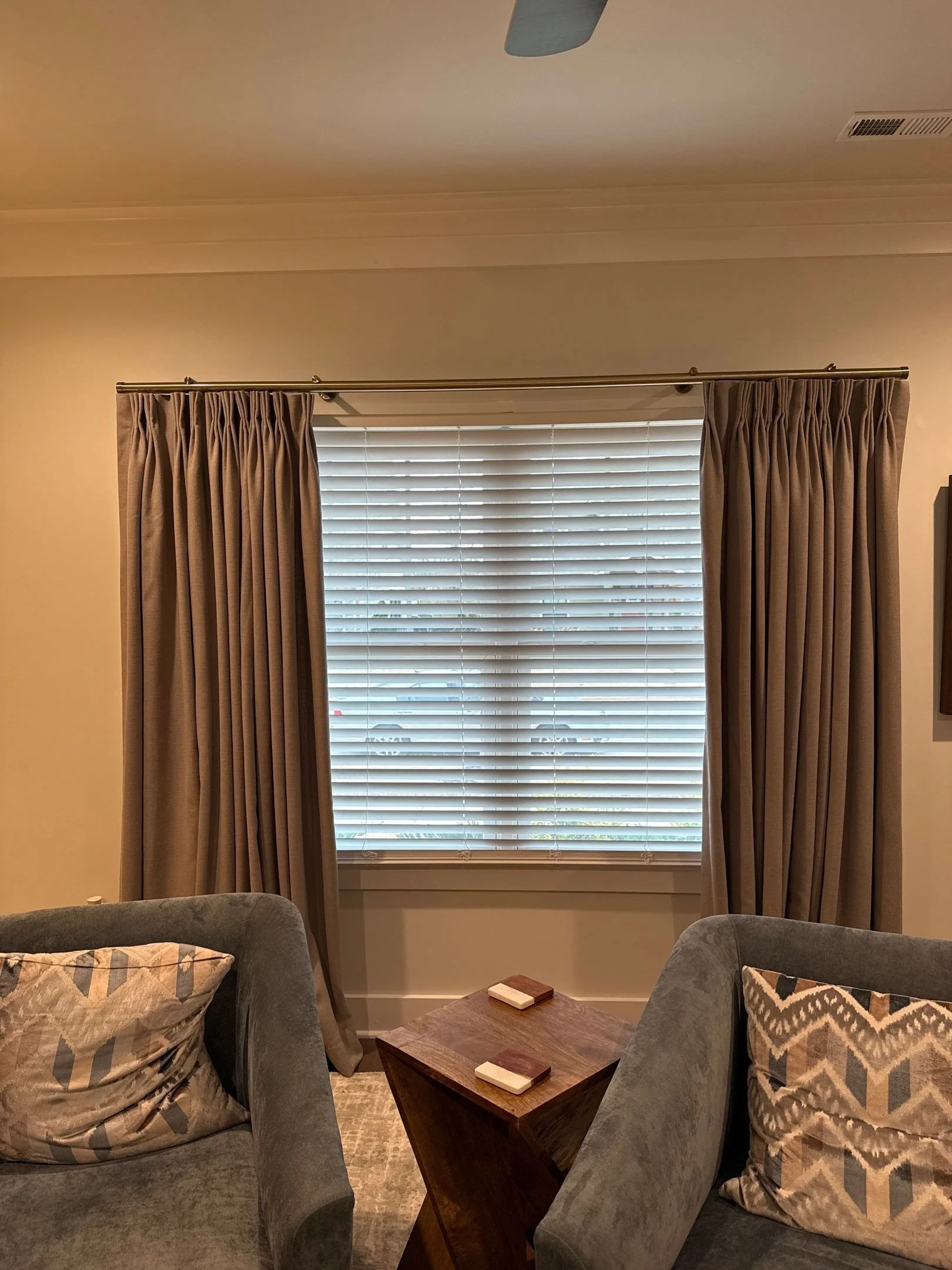
Most "drafts" by a closed window are not air leaking in from outside. They are room air cooling against cold glass and sinking to the floor, which feels exactly like a breeze. You stop that kind of draft by putting a barrier between the room and the glass: a close-fitting cellular shade, a roller shade in side channels, or floor-length lined drapery. A true leak, where outside air is getting in, needs sealing first. The trick is figuring out which one you have.
Real leak or cold glass? Do this test first
Pick a cold, windy evening. Close the window, lock it, and turn off any ceiling fan or nearby vent.
Hold a lit incense stick or a strip of tissue paper next to the sash joints and the edges of the frame. If the smoke blows sideways or the tissue flutters toward the room, outside air is getting in. That is a leak.
Now hold the back of your hand in front of the middle of the glass and slowly lower it toward the sill. If you feel cold air pouring downward but the smoke test was calm, there is no leak. The glass is chilling the air next to it, and that air is sliding down the window and across the floor. Heating people call this a convection loop. You call it the reason your feet are cold on the couch.
Plenty of windows have both problems at once, so it is worth checking both.
If it is a leak, seal it before anything else
A window treatment will soften a leak, but it will not fix one. If the smoke moved, deal with that first. Worn weatherstripping, a latch that no longer pulls the sashes together, and an unsealed gap behind the trim are the usual culprits. We walked through the whole sealing process, step by step, in How to Insulate Your Huntsville Windows Before Winter Hits, so we will not repeat it here.
Once the gaps are closed, whatever chill is left is coming off the glass. That is where treatments come in.
The treatments that actually stop the downdraft
What all of these have in common is that they trap a layer of air between the room and the glass and keep it from circulating. The tighter the fit, the better they work.
Cellular shades, inside mounted
The honeycomb cells hold still air against the glass, and an inside mount leaves only a small gap at each side. For most bedroom and living room windows, this is the single most effective fix. Double cell fabrics hold more heat than single cell.
Roller shades in side channels
A plain roller shade leaves a gap down both sides where cold air spills out. Add side channels, which are slim tracks the fabric runs in, and those edges close up. This is popular in bedrooms because the same channels block the light that sneaks around the edges. Our roller shades can be ordered with them.
Lined drapery, hung high and to the floor
Drapery stops drafts when it seals against the wall, not the trim. Mount the rod several inches above the frame and wide enough that the panels overlap the wall on both sides, and let the fabric reach the floor. A short panel just lets the cold air roll out underneath. A valance or cornice board on top closes the gap where warm air gets pulled in over the rod. See our custom drapery for lined options.
Layering for the worst windows
On a north-facing picture window or a single-pane window in an older house, one layer may not be enough. A cellular shade down against the glass with drapery closed over it is about as warm as a window gets without replacing it.
The windows that cause the most trouble
Sliding glass doors. Big glass, a track at the bottom, and a gap at the top. A vertical cellular shade or a heavy drapery panel on a wide rod works better here than anything horizontal.
Old wood windows. Charming, and often leaky. Seal them first, then add an inside-mounted cellular shade. Outside mounts tend to leave more gap on old frames that are not square.
Bay and corner windows. The gaps between separate shades let cold air through. Measuring each section so the shades nearly meet makes a bigger difference than people expect.
Windows behind beds and sofas. You feel these drafts most because you sit right in the path. A roller shade with side channels or a cellular shade keeps the chill off without bulky fabric behind the furniture.
Quick fixes while you wait
If you are dealing with a cold room this week, a few things help right away:
Close shades and curtains at dusk, before the room loses its heat, and open the south-facing ones on sunny afternoons.
Roll a towel or a draft snake along the sill of the worst window.
Move the couch or bed a foot away from the glass so you are out of the cold-air path.
Check that your existing shades actually come all the way down. A blind with a broken cord or a shade that stops short leaves a gap. If something is broken, our repair service can often fix it without replacing the whole thing.
None of these are permanent, but they will make the evenings more comfortable.
When to bring in a pro
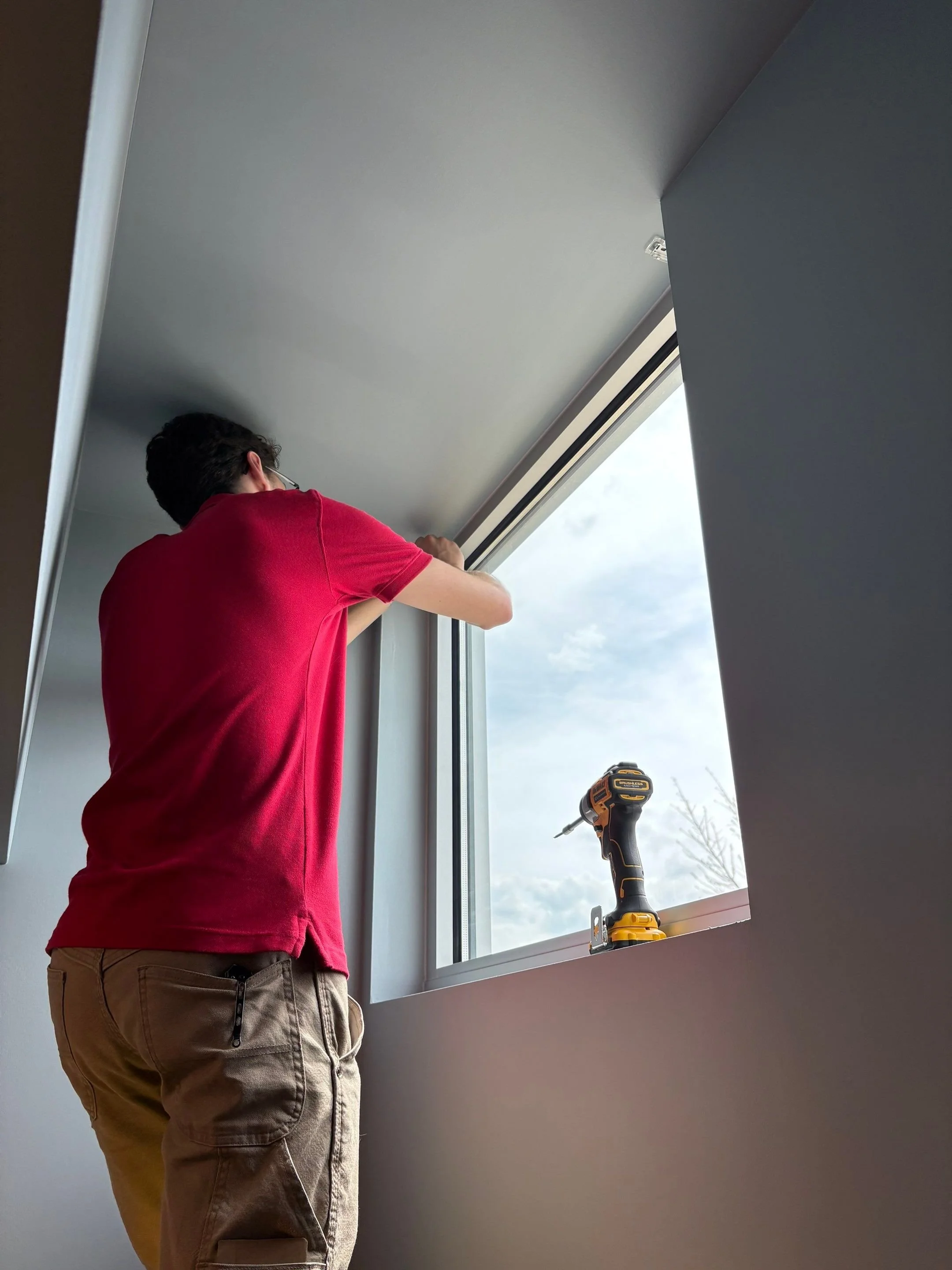
If you have done the smoke test, sealed what you can, and a room still feels cold, the fix is usually in the fit of the treatment, and fit comes down to measuring. We measure for the gap, not just the window, because a quarter inch on each side is the difference between a shade that seals and one that does not. Call us at (256) 883-1786 and tell us which room is giving you trouble.
Frequently asked questions
Why do I feel a draft when my window is closed? Usually because the glass is cold. Air next to it cools, gets heavier, and sinks to the floor, which feels like a breeze. A smoke or tissue test tells you whether outside air is also leaking in.
What is the best window treatment for drafty windows? For most windows, an inside-mounted cellular shade. For sliding doors and large windows, floor-length lined drapery hung high and wide. On the coldest windows, both together.
Do curtains help with drafts? Yes, if they are lined, reach the floor, and overlap the wall at the sides. Short or loose curtains let cold air spill out underneath and do much less.
Do blinds stop drafts? Standard slatted blinds do very little, because air moves freely between the slats. Cellular shades and roller shades in side channels are much better at it.
Should I fix the leak or buy new shades first? Fix the leak first. Sealing is cheap, and a shade cannot make up for outside air coming through a gap.
Get the cold room back
Pick the one room you avoid in January and start there. Call (256) 883-1786 for a quote, or price your window treatments online to see a number first. Our in-house crew installs every job, and it is backed by a lifetime installation guarantee plus three years of service calls.
