
Do Cellular Shades Really Save Energy in Winter?
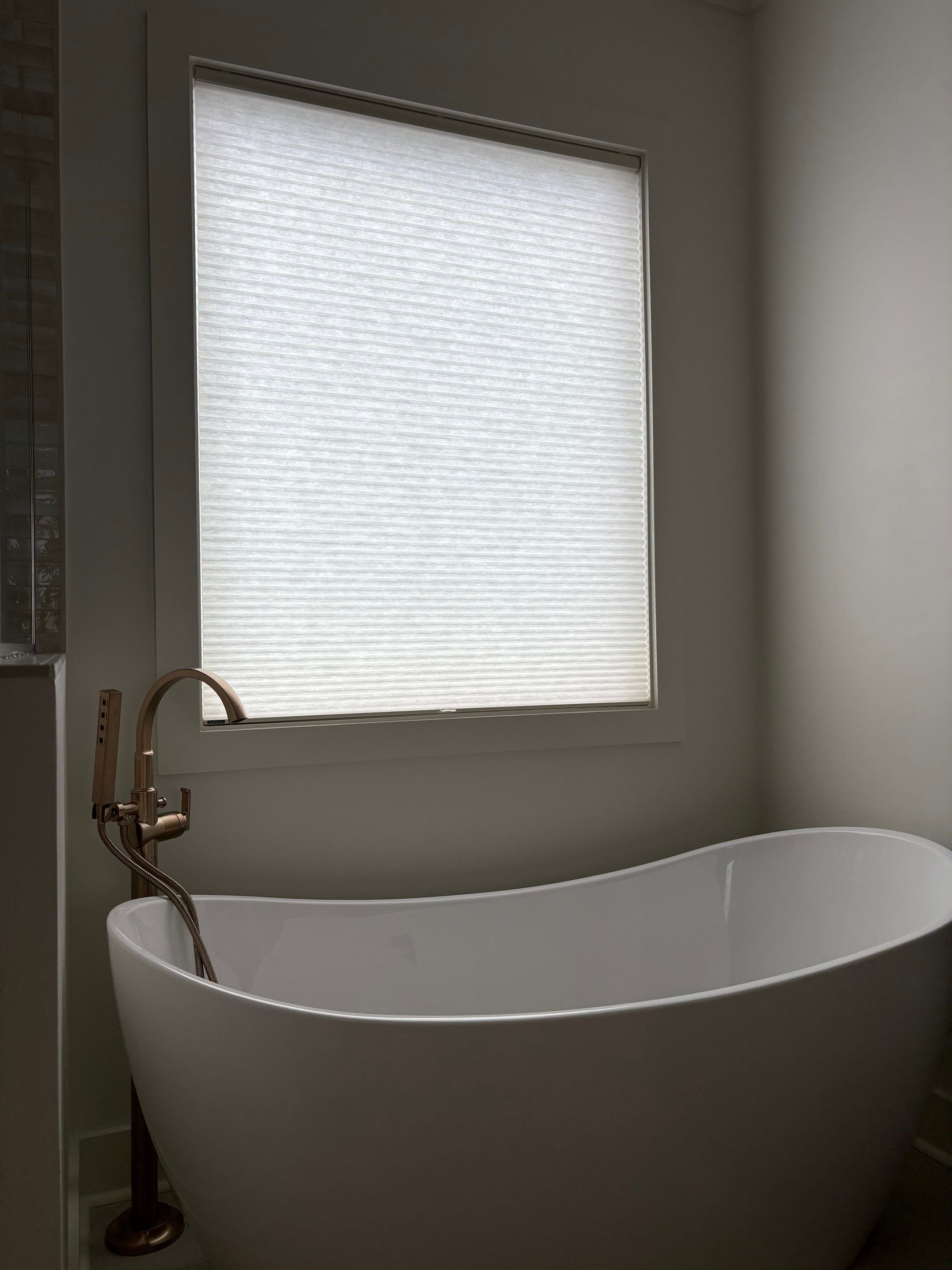
Yes. Cellular shades are the most insulating window covering we install, and in winter the difference is something you can feel standing next to the glass. But the honest version of that answer has conditions attached, because two cellular shades on the same window can perform very differently depending on how they are built and how they are mounted.
Here is what is actually happening, and what to look for so you get the version that works.
The insulation comes from trapped air, not the fabric
A cellular shade, also called a honeycomb shade, is fabric folded into rows of hollow six-sided cells. When the shade is lowered, each cell holds a pocket of still air between your room and the window.
Still air is a good insulator. That is the same reason a puffy jacket keeps you warm: the down is not doing the work, the air it holds is. The fabric of a cellular shade matters, but the pocket is the point.
This is what separates cellular shades from every other soft treatment. A roller shade is a single flat layer. A wood blind is a stack of slats with gaps between them. Neither creates a sealed pocket of air, so neither slows heat transfer the way a cell does.
Single cell or double cell changes the result
A single-cell shade has one row of pockets. A double-cell shade stacks two rows, giving you two air layers instead of one.
Double cell insulates better. It is not a small difference either, and in a room you are actively trying to keep warm it is usually worth the upgrade. The tradeoff is a slightly thicker stack at the top of the window when the shade is raised, and a modest step up in price.
Where we usually recommend each:
Double cell for bedrooms, north-facing rooms, bonus rooms over garages, and any window that currently feels cold to stand near.
Single cell for rooms that are already comfortable, where you want the light control and a bit of insulation but do not have a heat problem to solve.
Fabric type matters more than people expect
Room-darkening cellular fabric insulates better than light-filtering, because the denser weave and the liner slow heat transfer further on top of what the cells are already doing.
That gives you an easy decision in a bedroom, where you probably want the darkness anyway. In a living room or kitchen where daylight is the priority, light-filtering cellular is still a real improvement over bare glass, just not the maximum.
There is also a middle path we use often: a dual shade with light-filtering fabric on the top section and room-darkening on the bottom, so you keep daylight at eye level and seal the lower half of the window.
Fit is the part most people get wrong
This is where the same product succeeds or fails. Heat does not only pass through a shade, it goes around it.
A cellular shade mounted inside the window frame, sized so the gaps at the sides are minimal, holds a genuine pocket of warm air against the glass. The same shade hung outside the casing, floating an inch off the wall, lets room air slide behind it, roll down the cold glass, and spill back into the room at floor level. That convection loop undoes a good part of the benefit.
Two things fix it:
Inside mount with a tight measurement. This is the single biggest variable, and it is why we measure every opening rather than working from a homeowner's numbers.
Side channels on windows where you want maximum performance. They close the edge gap almost entirely and are worth it on the worst window in the house.
If you take one thing from this article, take this: on insulation, the install is not a detail. It is most of the result.
Where cellular shades are not the right answer
We would rather be straight about this than oversell a product.
If your window seals have failed, which usually shows up as fog between the panes, a shade is managing a symptom. It will help, but the window is the problem.
If the room's issue is daytime solar heat rather than nighttime heat loss, a solar screen shade or exterior shading is the more targeted tool. Cellular shades are a heat-retention product first.
And if you have a very large opening or a sliding door, cellular in the standard horizontal format is often not the best fit. There are vertical cellular options built for those openings, which is a different conversation.
For the coldest windows, the strongest setup is usually not a shade alone but a cellular shade with lined drapery layered over it. Two barriers, with air between them.
What this looks like in practice
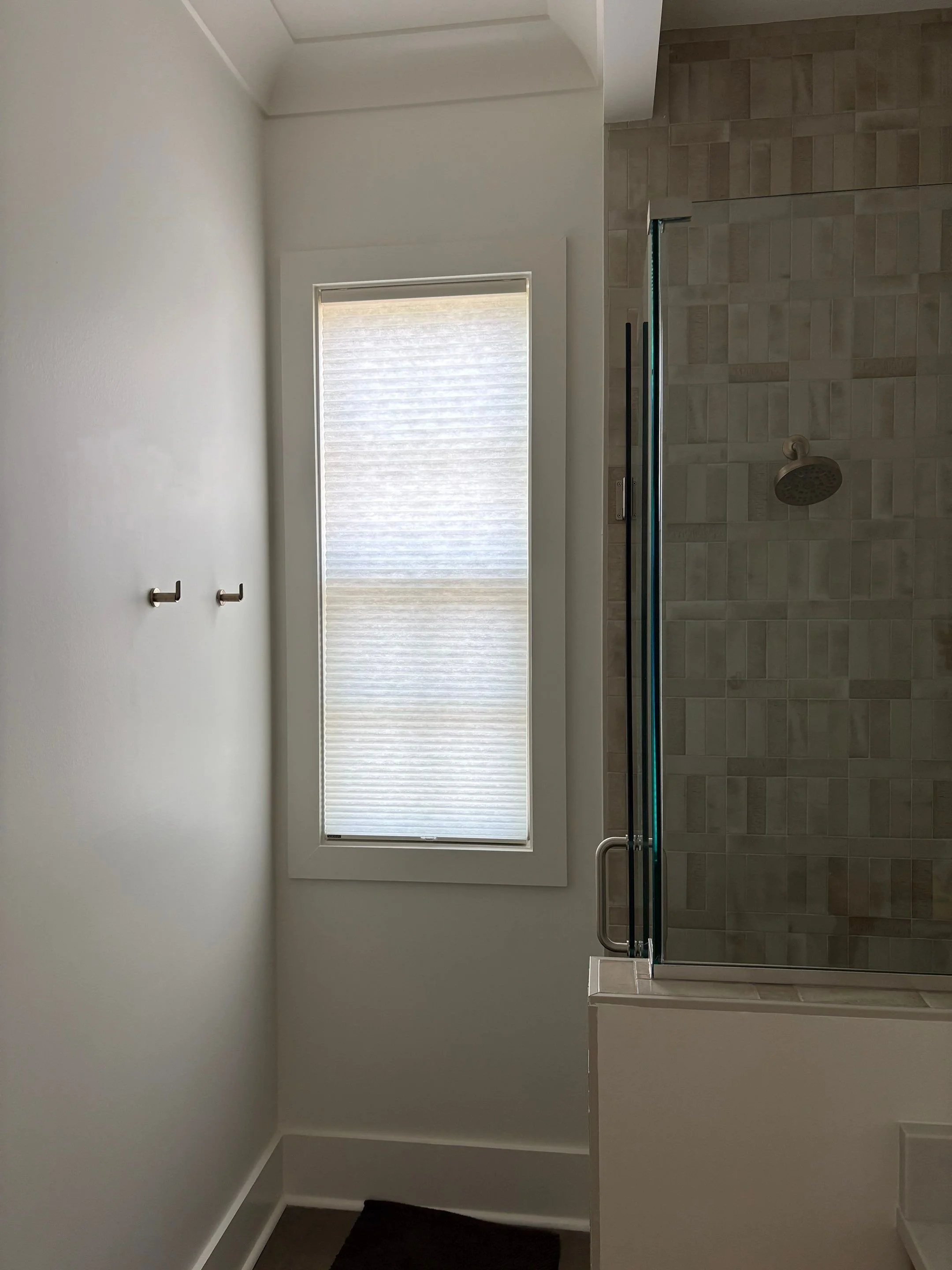
Most of the winter calls we take in Huntsville come down to one or two rooms that never feel right after dark. When we come out we check the exposure, look at the condition of the glass, and see whether whatever is on the window now has gaps big enough to defeat the purpose. Very often the existing shade is fine as a product and wrong as a fit.
Then we measure properly. Our crew installs in-house, and every job carries a lifetime installation guarantee plus three years of service calls, so if something is not sitting right a year from now you call us and we come fix it.
If you want more on how the cell structure works across the whole year, our guide to energy-efficient honeycomb shades covers the summer side too.
Frequently asked questions
Do cellular shades save energy in winter? Yes. The hollow cells trap still air against the window, which slows heat moving from the room to the cold glass. They insulate better than roller shades, blinds or unlined curtains.
Are double cell shades worth the extra cost? In a room with a real heat problem, generally yes. Two air layers insulate better than one. In a room that is already comfortable, single cell is usually enough.
Do cellular shades work in summer too? They do. The same trapped air slows heat coming in as well as heat going out. For direct solar gain, though, a solar screen shade or exterior shading is more targeted.
What is the R-value of a cellular shade? It varies by cell count, cell size and fabric, and the manufacturer's figure assumes a tight inside mount. Treat published R-values as a comparison between products rather than a promise about your specific window, since fit changes real-world performance substantially.
Will cellular shades fix a drafty window? They will make the room noticeably more comfortable, but a draft is air coming through a gap. Seal the gap first with weatherstripping or caulk, then add the shade for the heat loss through the glass.
Get the fit right and the product does its job
Cellular shades are one of the few window treatments that pay you back in comfort you can actually feel, provided they are the right build and measured properly. If there is a cold room in your house, call (256) 883-1786 and we will come see what is going on, or start with our pricing tool if you want a number first.
