
Best Window Treatments for Your Living Room
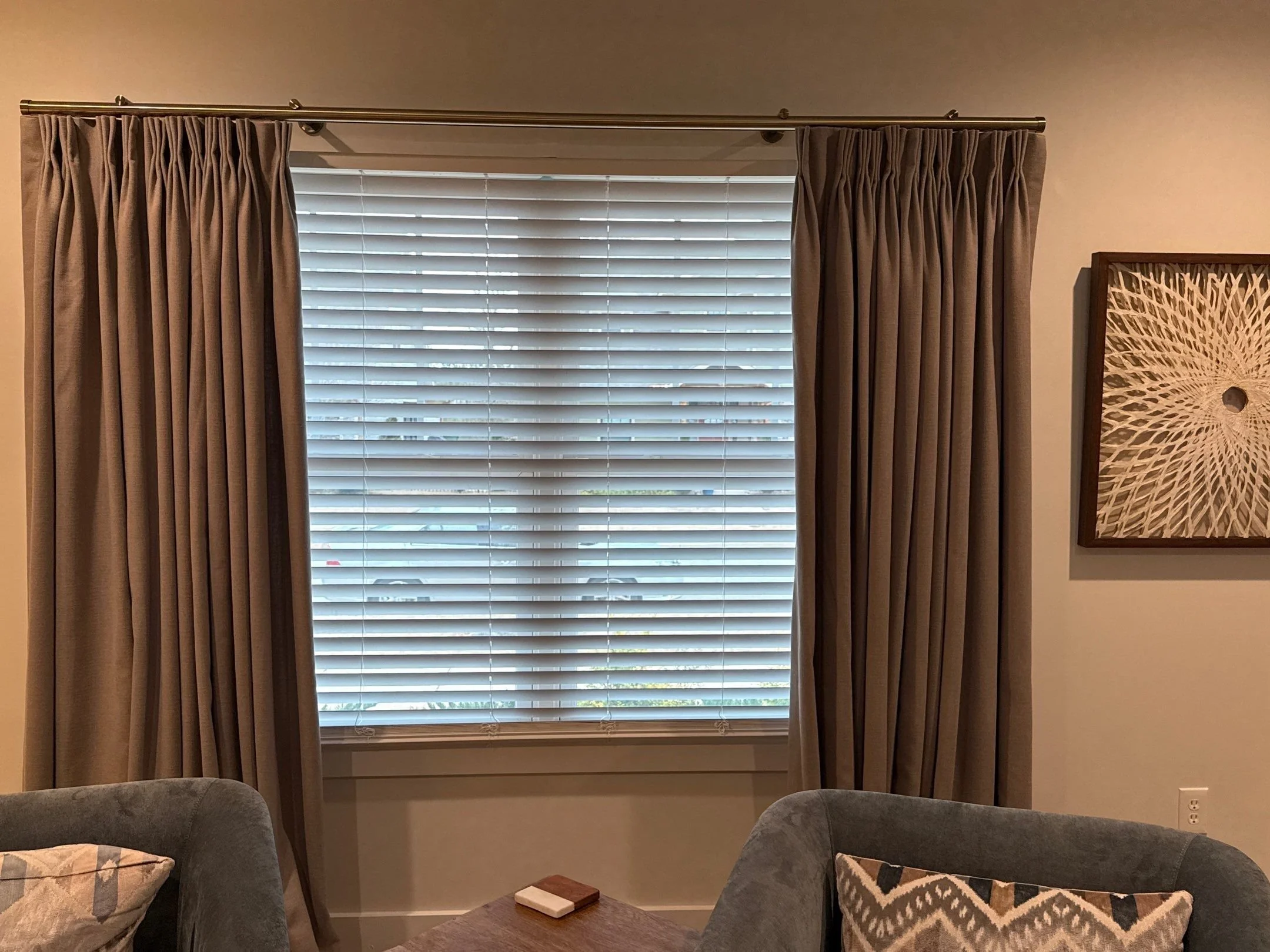
The living room is the hardest room in the house to get right, because it is the only one asked to do four jobs at once. You want light during the day, glare off the television in the evening, privacy after dark, and it has to look good, because this is the room people actually see. Layering a hard treatment with custom drapery solves most of that, but the right combination depends on which of those four problems is loudest in your house.
And then there is the sliding glass door, which most living rooms have and almost nobody knows what to put on. We will get to that, because it is the question we field most often.
Start with the problem you actually have
Before picking a product, name the issue. Homeowners who skip this step end up with something attractive that does not fix anything.
Glare on the screen. You need something that diffuses light without killing the room. Solar or light-filtering fabrics.
Late-day heat and fading. West-facing windows. You need a fabric with real solar performance.
Privacy at night. After dark, a lit room is a fishbowl. You need something that closes fully.
The room feels cold. Insulation, which means cellular or lined drapery.
The room feels unfinished. Drapery. Almost always drapery.
Most living rooms have two of these, which is why layering wins.
The treatments that work best in a living room
Light-filtering honeycomb shades are our most common living room recommendation. They soften daylight, cut glare, and insulate better than anything else in the category, which matters in both an Alabama July and an Alabama January. Top-down bottom-up operation is worth asking about here: you drop the top for daylight while keeping the bottom closed for privacy from the street.
Roller shades are the clean, minimal option. In a solar fabric they cut heat and glare while you still see out, which suits a living room with a view worth keeping. They disappear when raised, which is the appeal in a room where you do not want the windows to be the story.
Plantation shutters are the architectural choice. They tilt for light control, close for privacy, and they read as part of the house rather than something added to it. They cost more than a shade and they are worth it in a room you spend real time in.
Drapery is what makes the room feel finished. Even in a living room where a shade is doing all the functional work, a pair of stationary panels at the sides adds height, softness and color. Mount the rod high and wide, let the panels reach the floor, and a standard builder window starts looking like a designed one.
What to put on a sliding glass or patio door
Living rooms are where sliding doors usually are, and this is the single most common question we get on a residential consultation. The traditional answer was vertical blinds, and almost nobody wants those anymore. There are two solutions we recommend instead, and both are Norman products we install regularly.
SmartDrape shades
SmartDrape is the closest thing to a proper answer for a patio door. It uses extra-wide individual fabric vanes hung from a heavy-duty rail, and it solves the specific problems that make sliding doors awkward:
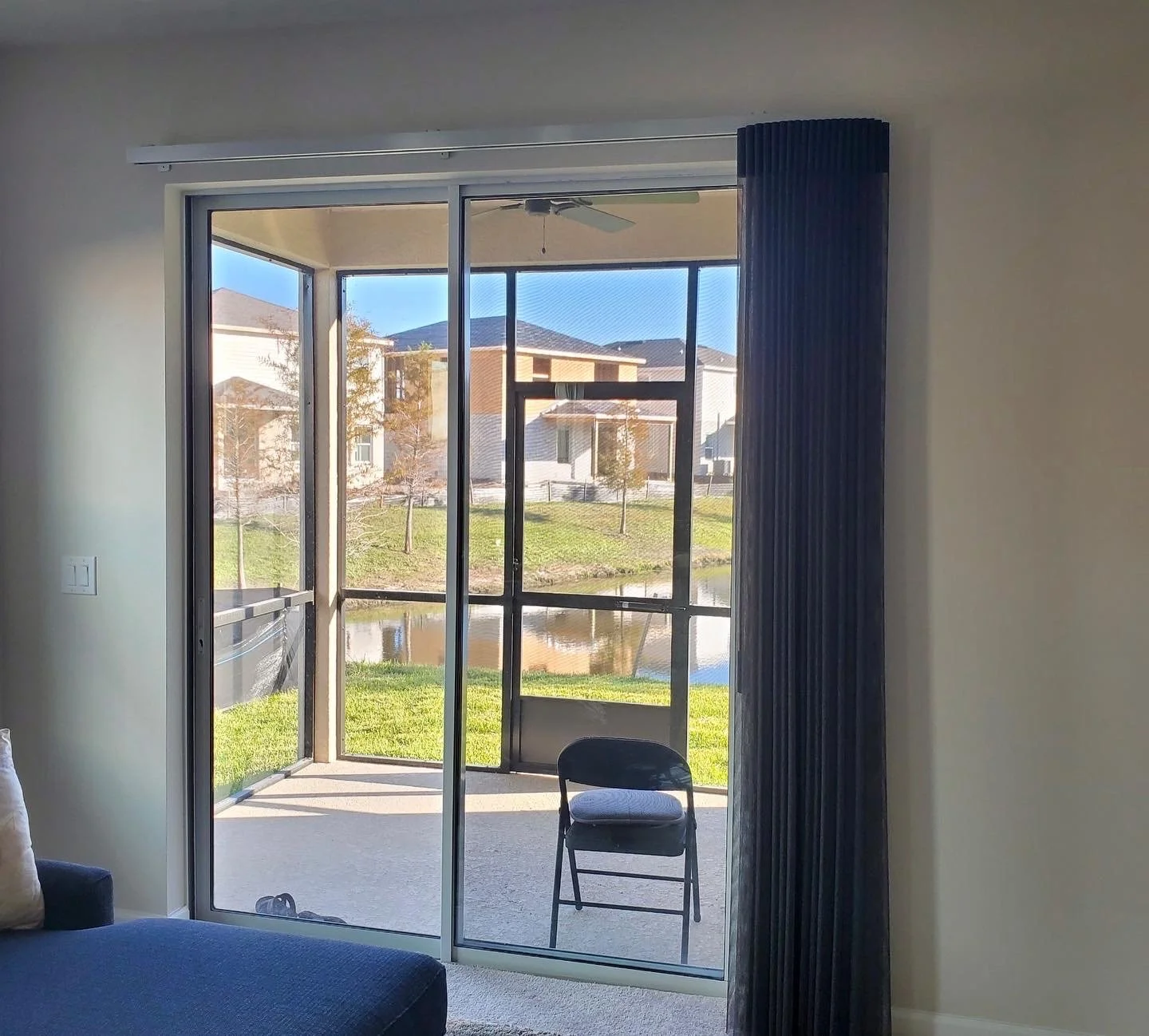
You can walk through it. The vanes part as you pass, so you are not opening and closing a shade every time you step onto the patio. On a door you use daily this is the feature that matters most.
Sheer to solid with a wand twist. Rotate the wand and the vanes turn from a sheer view-through to a solid privacy panel. Same product, two completely different rooms, morning and night.
It handles the width. A single SmartDrape spans up to nearly 24 feet, and two can be combined for openings past 47 feet. Sliding doors and wide window walls are exactly what it was built for.
The wide vanes read as fabric, not slats. They are designed to minimize the vertical outlines that made old vertical blinds look cheap, so you get more natural light and a cleaner look.
Cordless and Best for Kids certified, which matters in a family living room.
Individual vanes can be machine washed or replaced, so one damaged section is not a whole new shade. Motorized operation is available if you want it on a remote or a schedule.
Vertical honeycomb shades
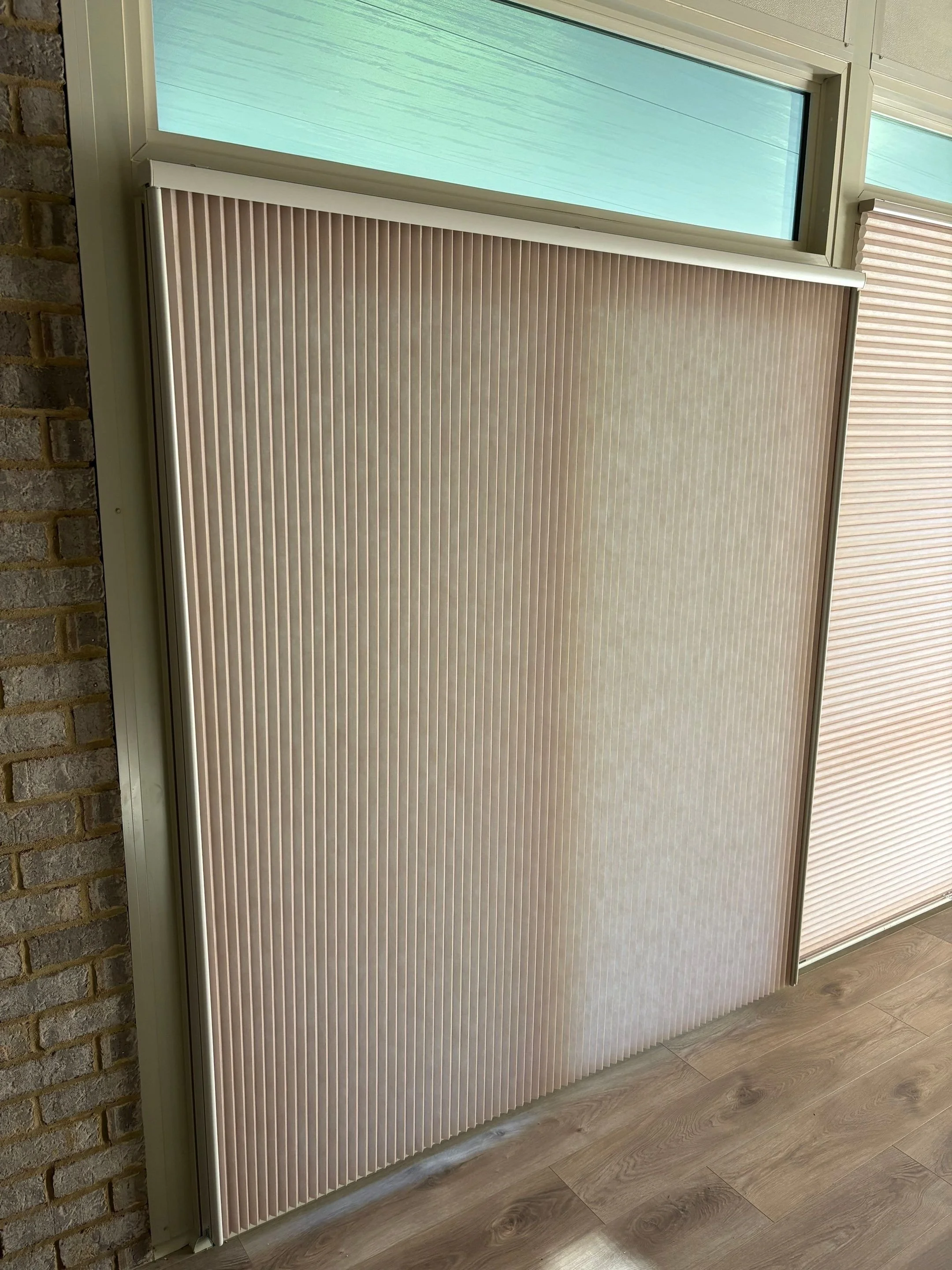
The vertical honeycomb shade is the pick when insulation is the priority. It brings the same trapped-air cell structure that makes horizontal cellular shades so effective, but built to traverse across a door opening instead of raising and lowering.
A sliding door is a large sheet of glass, often the largest in the house, which makes it the biggest single point of heat gain in summer and heat loss in winter. A vertical honeycomb puts a genuine insulating layer across all of it. It stacks neatly to one side when open, and it gives you a soft, continuous fabric face rather than individual slats.
Which one to pick: if the door is used constantly and you want the sheer-to-solid flexibility, SmartDrape. If the room behind that door runs cold in winter or hot in summer and comfort is the real complaint, vertical honeycomb. If you are torn, we will show you both against the actual opening.
For a fuller breakdown of the door options, our technician wrote a dedicated piece on the best window treatments for your sliding glass door that is worth reading alongside this.
Make the door and the windows talk to each other
Here is the mistake we see most in living rooms: the windows get one treatment and the sliding door gets whatever was easiest, and the room ends up looking like two rooms.
There are a couple of ways to keep it coherent. Match the fabric family across both, so a light-filtering honeycomb on the windows pairs with a vertical honeycomb on the door in a coordinating color. Or run coordinating colors across the whole home, which is one of the things the SmartDrape line is set up for. Or, if the products are genuinely different, tie them together with drapery panels in one fabric running across both openings, which is often the best-looking answer.
Frequently asked questions
What are the best window treatments for a living room? Light-filtering cellular shades, solar roller shades, or plantation shutters for the functional work, with drapery layered over the top for warmth and finish. Which one leads depends on whether your main problem is glare, heat, privacy or cold.
What can I put on a sliding glass door instead of vertical blinds? SmartDrape shades and vertical honeycomb shades are the two we recommend. SmartDrape lets you walk straight through and twists from sheer to solid; vertical honeycomb adds real insulation across a large glass opening.
Can you still walk through a shade on a patio door? With SmartDrape, yes. The individual vanes part as you pass and fall back into place, so you do not have to open the shade to use the door.
Should living room curtains touch the floor? Yes, in almost every case. Panels that stop short of the floor make a ceiling look lower and read as unfinished. Floor-length also helps with insulation, since it stops warm air sliding underneath and rolling down the cold glass.
How do I stop glare on my TV without making the room dark? A light-filtering or solar fabric diffuses the light instead of blocking it. Top-down bottom-up cellular shades work particularly well here, because you can let daylight in high while cutting the low-angle light that hits the screen.
Let us see the actual room
Living rooms are hard to solve on paper, because the answer depends on which way the windows face, where the television sits, and how you actually use the door. We would rather stand in the room with you. Call (256) 883-1786 for a quote and we will bring samples of the door options so you can see the difference between them before you decide.
