
Window Treatments for Huntsville Retail Stores and Storefronts
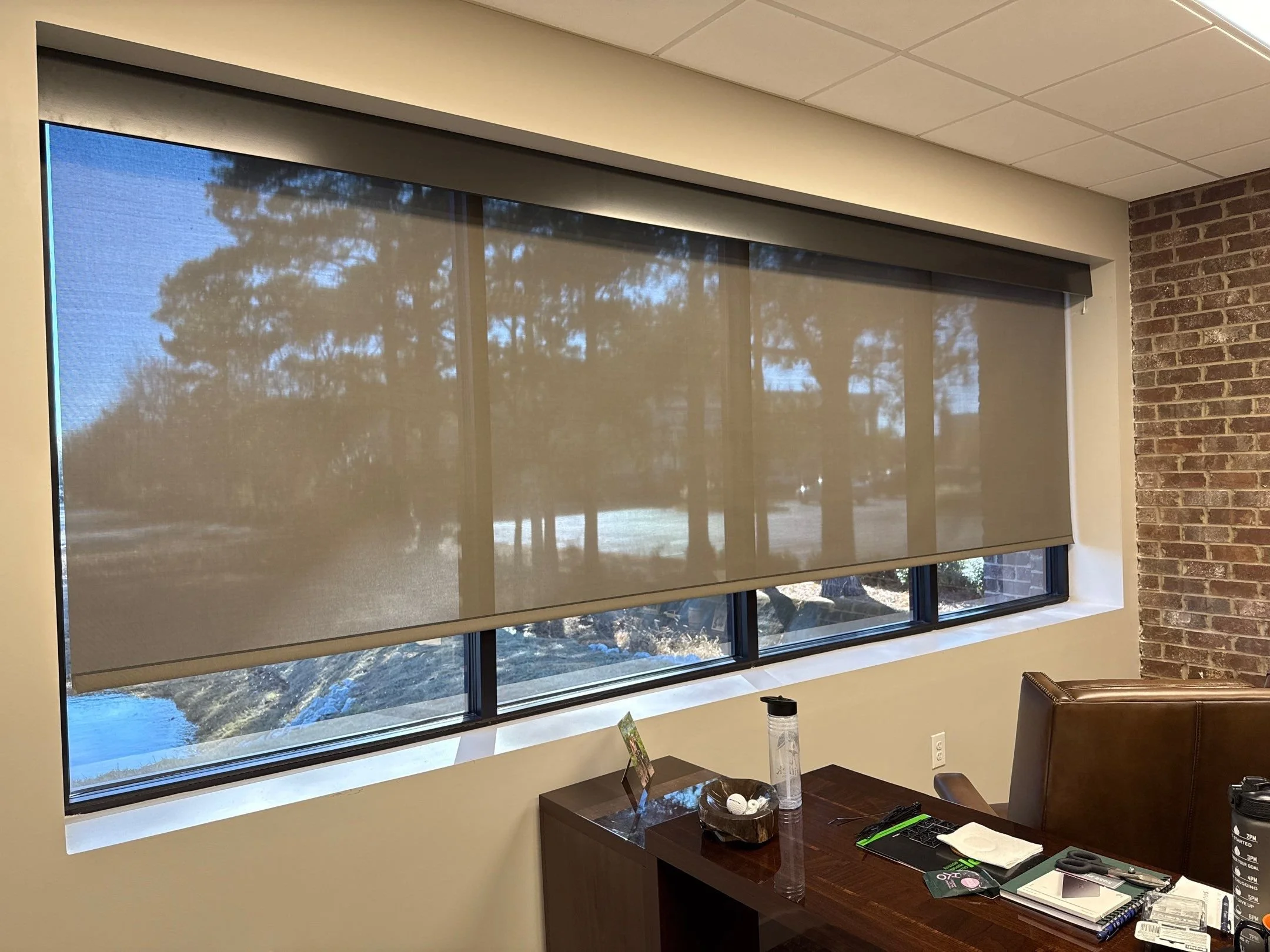
Retail glass has a job that no other commercial glazing has. It has to pull people in from the sidewalk, show the product at its best, and do it without turning the front of your store into a greenhouse or bleaching the stock in the display. Most storefronts we look at in Huntsville are managing that with nothing, or with something that was installed for a previous tenant. Commercial window treatments sized and specified for retail solve all three problems at once.
The core tension is simple. Every solution that reduces heat, glare and fading also risks hiding the thing you are trying to sell. The right specification is the one that manages the light without closing the window.
The four problems retail glass creates
Glare on the sales floor. Low-angle morning and late-afternoon sun washes across the floor, and staff at a counter facing the glass spend the day squinting. It affects how long customers browse, and it affects the people who work there for eight hours.
Heat load at the front of the store. A large south or west glass frontage puts real load on your HVAC. The first ten feet inside the door end up several degrees warmer than the back, which is usually where your best display is.
Fading on merchandise. This is the one that costs money directly. Sunlight breaks down dyes, and anything sitting in a display window takes the worst of it. Textiles, packaging, printed material and leather are the most vulnerable. A faded item is a markdown or a write-off.
Screens you cannot read. If you have a POS display, a digital sign, or any monitor near the front, glare makes it useless for part of the day.
What actually works on a storefront
Solar screen shades are the default for retail, and for a good reason. The fabric is a technical mesh with an openness factor, usually somewhere between 1% and 10%. A lower number blocks more, a higher number preserves more view. Lowered over a display window, a solar screen shade blocks a large share of solar energy and UV while you still see straight through it from inside, and from outside the display stays visible.
That is the property that makes them work for retail specifically. You are cutting the heat and the fading without putting a wall in your window.
Dual-fabric setups cover the split shift. A solar fabric for trading hours and a room-darkening or blackout fabric for after close, on the same bracket, so the front is protected during the day and screened at night without compromise either way.
Motorized operation earns its cost in retail more than anywhere else. Nobody on your team is going to walk the frontage twice a day to adjust six shades manually, which means manual shades in a store end up permanently in one position. On a timer or a light sensor, they actually track the sun. On a wide frontage with a run of bays, this is usually the difference between a system that works and one that gets ignored.
Roller shades in a decorative fabric handle the areas away from the display: back offices, stockrooms, a break room, a fitting area. There is no reason to spend solar-fabric money where there is no display to protect.
Specification details that matter in a store
A few things separate a retail install that looks intentional from one that looks like an afterthought.
Run the sightline straight. On a frontage with several bays, the shades should hang at a consistent height and stop at a consistent line. A ragged row across the front of a shop is visible from the street and it undermines the display.
Conceal the hardware. A recessed or concealed headbox keeps the top of the window clean. In a retail environment where you have invested in the fit-out, exposed brackets read cheap.
Match the openness to the exposure, not the whole store. The west bay and the north bay do not have the same problem. Specifying one fabric across everything means over-treating some windows and under-treating others.
Think about what the shade color does to the display. A dark exterior-facing fabric maximizes view-out and cuts glare but can read heavy from the street; a lighter face is more open but reflects more. This is a merchandising decision as much as a technical one.
If the energy side is your driver, we covered the numbers on that in our piece on how commercial window treatments lower business energy costs.
What it looks like to work with us
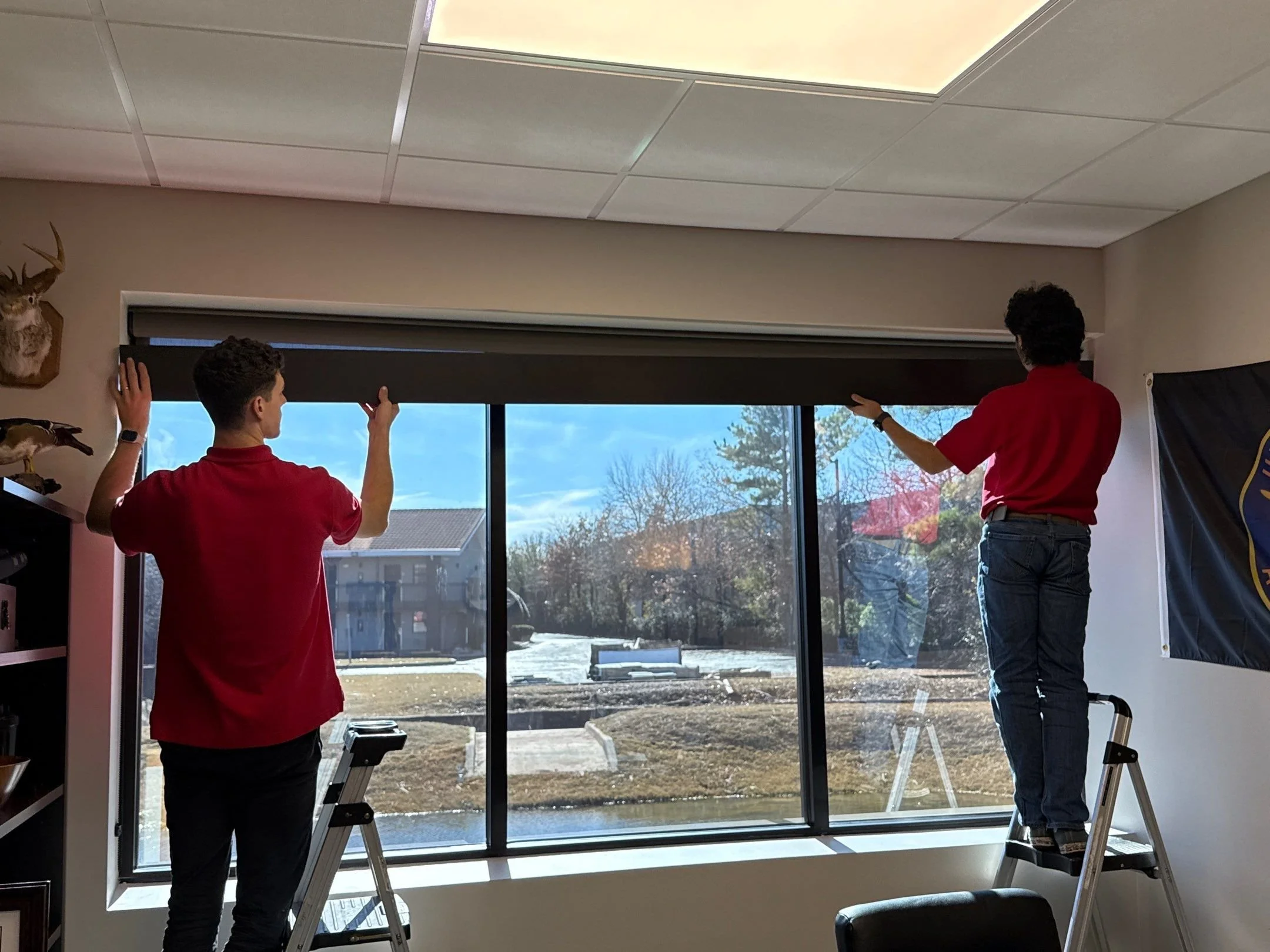
We keep it simple for businesses. You call and tell us what problems you are facing with your current set up and any context we need to understand the goals. Before we take up any of your time onsite, a short phone conversation ensures we have a solution that can work for you. If we have enough information on the phone to provide a rough high-low estimate, we will share that with you. Transparency is one of our core tenets.
Once we are confident we can help, we will schedule an onsite visit at a time that works for you and whoever will be making the final decision. In addition to transparency, we value efficiency. There are design choices to make, and decisions that impact pricing. It is essential we have a direct line of communication to whoever is evaluating the options and tradeoffs.
While onsite we will get exact measurements and come to an agreement on the specific specs. Usually within one business day of that onsite visit we will have a quote prepared. Along with the written quote you will receive a recorded walkthrough recapping all the details discussed.
On install day, our in-house crew installs it, scheduled around your trading hours so we are not on your sales floor during your busiest window. Every job carries a lifetime installation guarantee plus three years of service calls. We serve retailers throughout Huntsville and North Alabama.
Frequently asked questions
Will window shades hide my storefront display? Not if they are specified correctly. Solar screen fabrics have an openness factor that lets you see through them from both sides while blocking most of the solar energy and UV. Your display stays visible from the sidewalk.
How do I stop merchandise fading in a display window? A solar screen shade with a low openness factor blocks the large majority of UV, which is the main driver of fading. Rotating stock in the window helps too, but the shade is what protects everything behind it as well.
Are motorized shades worth it for a retail store? In most cases yes. Manual shades on a storefront tend to get left in one position because nobody has time to adjust them. On a timer or sensor they track the sun and actually deliver the benefit you paid for.
Can you quote a commercial job over the phone? Rarely, and we will not pretend otherwise. Commercial openings are harder to estimate sight unseen, the range of solutions is wider, and the specification depends on things we need to see. If we have enough on the phone to give you a rough high-low, we will. Otherwise we come look.
How long does a retail install take? It depends on the size of the frontage and the products specified. We schedule around your trading hours so the work happens when the store is quiet, and we give you the timeline in writing with the quote.
Start with a phone call
If the front of your store is too hot, too bright, or costing you stock to fading, tell us what you are dealing with and we will tell you honestly whether we have a solution for it before anyone drives out. Call (256) 883-1786.
